
Voice-over: This is Leaders in Finance, a podcast where we find out more about the people behind a successful career. We speak with the leaders of today and tomorrow to discuss their motivations, their organisations, and their personal lives. Why?
Because the financial sector could use a little more honest conversation. Our guest this episode once found himself whitewater rafting on the Zambezi.
Todd: I remember walking out of the Zambezi at the end of the day and people said, “How was that?” And I said, “It was awesome. It was awesome.” “Oh, would you do it again?” No.
Voice-over: He grew up with rugby and he still think in teams.
Todd: We can’t all score the try in the corner, right? Someone’s got to do the hard work up front, but we all share in the win or the loss.
Voice-over: Today, he leads more than 500 people across 27 offices in New Zealand.
Todd: Look, I think it’s about giving clarity and being clear on what the strategy is. But then it’s about mobilising and getting everyone on the same page.
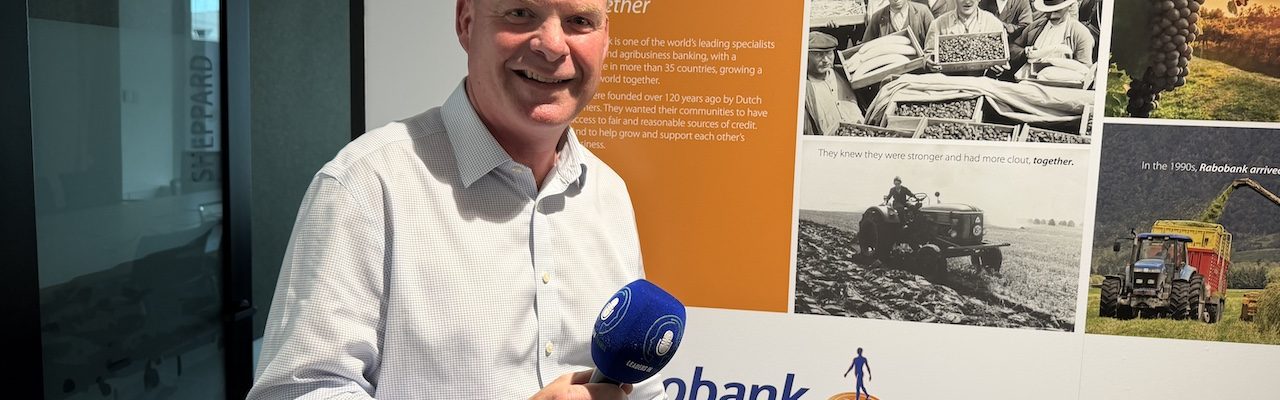
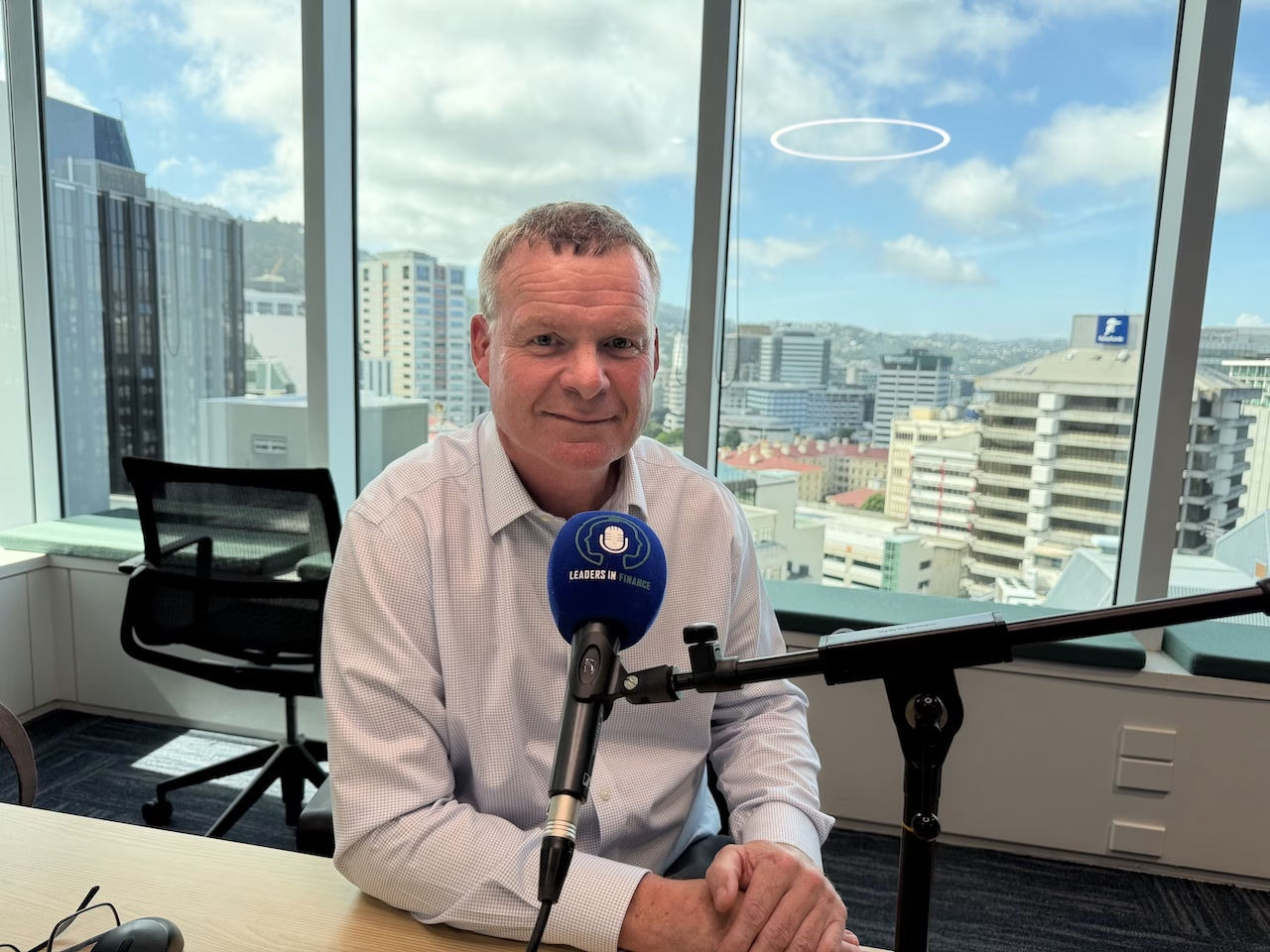
Voice-over: Our guest this week is Todd Charteris, CEO of Rabobank New Zealand. Your host is Jeroen Broekema.
Jeroen: Welcome to a new episode of the Leaders in Finance podcast. Thank you for tuning in. This week, we’re joined by our guest Todd Charteris, the Chief Executive Officer (CEO) of Rabobank New Zealand. Welcome, Todd.
Todd: Yeah, great to be here, Jeroen, and thanks for the opportunity to have a chat.
Jeroen: Wonderful. I’m very glad to be here as well, here in downtown Wellington, New Zealand, in person. No digital, just in person, much better always. And before we begin, I would like to thank our partners for their ongoing support of this podcast.
And these are the global consulting firm EY, Mogelijk Vastgoedfinancieringen, and Lepaya. Thank you very much, partners, for your support. And as a good tradition with Leaders in Finance, I’ll start by spelling the name of my guest, which is Todd, T-O-D-D, and Charteris is C-H-A-R-T-E-R-I-S.
And before we get started, I would like to introduce you a little bit. I mean, you will probably do more for me, I hope. But as said, Todd is the Chief Executive Officer of Rabobank New Zealand.
He took the helm in 2018, leading a team of over 540 employees across a network of 27 offices. He is responsible for the bank’s lending to the New Zealand food and agri sector, as well as its online retail savings business. Todd is a real Rabonist.
His journey with the bank began over 25 years ago in Te Puke as a rural officer. Since then, he has held numerous senior leadership positions within the group, both in New Zealand as well as in Australia. Before becoming CEO, he served as the National Manager for Country Banking in Australia, where he oversaw the bank’s specialist agricultural lending operations across the Tasman.
Todd grew up on a sheep and beef farm in Otago. He holds a Bachelor of Commerce from the University of Otago. He currently lives in Hamilton, and he and his wife, Lisa, have raised three children.
That gives a short overview of you. And first of all, I’d love to learn a bit more about you and Rabobank. I mean, about you, we’re going to talk a lot more as well.
But let’s start with Rabobank here in New Zealand. Could you introduce Rabobank here a little bit to me? Like, who are you actually serving?
Who are your customers? You know, we already said how many people work here, but maybe you can share a bit: what kind of roles, maybe a general picture of Rabobank New Zealand for people that don’t know.
Todd: Yeah, sure. And if we go back to when it all started here in New Zealand, which was 1994, Rabobank made an acquisition. It was the Primary Industry Bank of Australia, which had a very small presence in New Zealand at the time.
And then in 1998, Rabobank made a further acquisition: Wrightson’s Farmers Finance. And that really gave us that sort of national footprint, up and down the countryside. And, you know, those were humble beginnings. We were very small. I joined in 2000. We would have had well under 100 employees at the time. And we’ve steadily grown since then.
But throughout all of that, our purpose hasn’t changed. It’s about lending to the food and agri sector, right through that value chain: from farm inputs, fertiliser companies for example, seed companies, obviously to farmers and growers, but then also through the processing sector: packhouses, exporters, and all the major New Zealand export companies. New Zealand is an exporting nation. We export most of what we produce.
So it’s important for us to have that whole view of the value chain, I guess. At the same time, it’s somewhat unique within the Rabobank Group in this part of the world. In Australia and New Zealand, we also have a retail deposit offering, which provides a source of funding for us. So, you know, we have around 50,000 retail customers who essentially deposit their money with Rabobank here in New Zealand, and we lend it to the food and agri sector. That forms part of our funding.
As you said earlier, we’ve got over 500 employees now. We’re number two in the marketplace when it comes to agricultural lending, so we’re proud of that. But our local ambition matches our global ambition, which is to be the food and agribank of choice in this market. And we’re pretty determined to keep doing what we do. We’ve got a highly dedicated team of people and, yeah, we love what we do and want to do more. So that’s great.
Jeroen: You have quite a lot of offices across the country, right? Why is that?
Todd: Yeah, well, I think it’s just about having our people close to their client base. You know, there are farmers from the tip of Northland to the bottom of the South Island, and I know you’ve probably been to most of those places, but we do have 27 locations. And it’s about our people being close to where their customers are. We’re a cooperative bank, obviously, and for us it’s that cooperative mindset. We want to really invest in those local communities, and it starts with our people. So, we’re here in Wellington. Our head office is actually in Hamilton. We used to be based here in Wellington, and we’ve still got a big office here, but it’s more of an operational hub.
Our corporate head office is in Hamilton, and that’s very deliberate, because that’s a really major food producing region of New Zealand. So it gets our back office people as close to that market as possible. And to me, that’s really important because it connects everyone again to that purpose, and why we’re here.
Jeroen: Are you only serving the agri sector, or are you serving more broadly as well?
Todd: On the lending side, it’s predominantly, the majority is food and agri. And we are looking to do more on the energy transition side of things: renewable energy. That’s aligned with our global strategy in that space, and really to help facilitate and support the transition to more energy efficiency, and things like that.
Jeroen: Do the colleagues, your colleagues that work with clients, that are client facing, do most of them have more of a financial background or more of a food and agri background? Or could it be anything?
Todd: It’s more of a combination. I was actually out with some of our employees yesterday in Taranaki, which is great. It’s the best part of the job when you’re going and seeing customers, because that’s what it’s all about, right?
And no, look, the background of our people is, they’re highly skilled, highly skilled in terms of their financial acumen, but they’ve got a deep connection, I would say, to food and agri and essentially rural New Zealand. So they’re not all from that background, but they’ve got a connection. It could be a generation or two back, or on one side of the family, but, that’s New Zealand.
I mean, you don’t have to go too far. We rely heavily on the primary sector. So yeah, that’s what I think connects our people. It’s that connection to our purpose, and they know every morning what we’re going to be doing, right? Our strategy doesn’t change much, which actually is super important, because everyone’s got clarity on what we do. We get out there and we look to make a real difference out in the marketplace and in those communities.
Jeroen: And for yourself, as I said in the introduction, you came from a farm. Does it give you the so called street credibility if you visit customers? Because we met one time before and you told me that you actually still meet a lot of customers, although you’re managing a team of over 500 people, but you do go out and meet customers. Does it help that you have this background? Do the customers know?
Todd: Oh, look, I think where it helps is that it’s my passion, it’s my connection, and I’m really passionate about it. And yeah, I mean, it’s the part of the job I enjoy the most, because it’s actually why we exist, which is for our customers. And so, as I said, I was out seeing customers yesterday.
It’s fantastic. And yeah, does it help? I mean, yeah, look, I think you have that connection, you make that connection, but it’s not just all about people who have worked on farms. I mean, you’ve got plenty of people around you who’ve got those attributes, but, as Rabobankers and as financial partners, it’s about us bringing some value to that conversation and value to that relationship, so that we can help our clients achieve their goals.
Jeroen: Yeah, because ultimately, banking, and especially in this field, I could imagine, is still a lot about the relationship. Obviously, you need to have a good product, you need to understand the business. But yeah, the fact that you actually know each other, and especially what I’ve come to see here in New Zealand over the last few months, is that relationships are definitely very important. I mean, they’re everywhere, but definitely in a smaller country.
Todd: Yeah, absolutely. And, we’re talking about intergenerational businesses often, and succession is a real challenge in any business. So we’re dealing with multiple generations, and it’s a very privileged position when you’re part of that relationship, and it’s not something we take for granted at all.
We often talk about it as doing business at the kitchen table when we’re out talking to farmers, and doing business at the boardroom table when you’re talking to a corporate. But that relationship is special, it’s hard earned, and so we really respect that and work hard to, as I say, bring value there.
Because it’s not about finance in itself, it’s actually about where’s the other value you can create. And fortunately, with Rabobank and its global presence, expertise and knowledge, we can really bring that knowledge and those networks, which is of real value to our customers. And we’ve done it before. No other bank in New Zealand can introduce farming clients from here to farming clients in the US, for example, and South America. And those connections and insights are of real value and interest to our clients.
Jeroen: You just brought up the intergenerational, I mean, I would call the kind of the assets that will change. And in my preparation, I listened to you actually, where you gave an interview on this. I think it was 150 billion New Zealand dollars that is going to change hands over the course of, I don’t know, the next few years, or 10 years. So is that much bigger now than ever before?
Todd: Yeah, absolutely. The research, so we did quite a bit of research through the University of Waikato. And we often hear these comments: farmers and farm owners, landowners are getting older, and it’s probably the same in the Netherlands. But we actually did the research to prove it. And so the challenge is getting greater. And it’s a challenge that’s not insurmountable, but it is a challenge that we need to all wade into. And yes, they’re big numbers, and it won’t all be debt, but it’ll be a combination of things. So how do we solve that with clients, with industry, and also continue to drive efficiency?
So yeah, it’s a topic that’s very hard. It’s very emotive for a start. And you’re dealing with family businesses that have perhaps been in the family for a few generations, so it’s very emotive. And it’s financially challenging at times.
And the business environment we’re working in here in New Zealand, and it’s the same globally, is so much more complex. There are so many more moving parts, so many more regulations, and you’ve got to do this, and you can’t do that. And so the skill set required is quite different. So how do we all work together?
And for us at Rabo, there’s quite a piece we do, and it goes back to that cooperative sense that we have. We have a community fund here in New Zealand and Australia where we contribute to partnerships, and it could be in the education space. We run a lot of financial skills workshops, succession workshops for families, all of those things to actually help better equip our clients to deal with it. At the end of the day, we can’t solve the problems, but we can help with some of the ideas, challenges and solutions along the way.
Jeroen: Well, I guess it’s also a huge opportunity for you, right? This whole wealth transfer. I mean, there’s a lot of advice that needs to be given, but whether you’re allowed to do this, I don’t know. If you do, do you also actually have wealth managers helping with this?
Todd: No, we don’t offer advice, but there’s still a large part to play in terms of, you know, what are the networks we can create? One of the things we’re doing at the moment, with our clients’ consent, is actually sharing their input. More importantly, we’re sharing a number of case studies around, well, here’s something that’s worked in the past. Because every situation is different. Every business is unique. Every family is unique. And so it’s not one size fits all, that’s for sure.
Jeroen: So, when you joined, you said, I think, 2000, right? So, 25, 26 years ago. What was the reason you joined? Was it, you know, coincidental, or did you choose to work for Rabobank?
Todd: No, look, I think all things really came together for me, and it’s actually still the reason I’m here now. I did a finance degree, but I’ve come from a family background that’s been connected with farming. My mother’s family were dairy farmers. My cousin is still a dairy farmer. My sister and her husband are sheep and beef farmers in Southland. I worked on farms all the way through.
I went to university and when I left university, I actually worked for a livestock company. And I mentioned earlier that Rabobank purchased Wrightson’s Farmers Finance. I used to work for Wrightson on the livestock side. But I was quite good with numbers.
So I went into finance, then I worked in London for a couple of years in banking, and that really got me into that sort of finance thinking and solution based work. And then when I came back to New Zealand in early 2000, it was about bringing those two things together, which was that deep connection with rural New Zealand and the financial skills that went with it. So it was a perfect mix. And now with Rabo, what really attracted me then, and still does now, is just that sole focus. And that, as I said earlier, everyone knows, everyone gets out of bed every morning here and knows what the strategy is, because it doesn’t change much. And we don’t duck and dive between different markets and different lending segments. Everyone’s focused, and that really resonates with me.
Jeroen: Well, when you joined, it was still relatively small. And now it’s much bigger. It’s number two. You obviously want to be number one. That was very clear in the beginning. So that’s one of your top goals, I guess. But what do you think are the main reasons that you’ve grown so fast and actually became that number two in food and agri?
Todd: Oh, look, I do think that consistency in the marketplace and consistency of focus is really well received, because agriculture the world over is very cyclical. We’re dealing with exchange rates, you’ve got weather events, you’ve got global commodity prices, you’ve got a whole lot of variables. And so it’s never smooth sailing.
And I think what we have proven is the fact that if you’re consistent in the marketplace, our clients and New Zealand farmers recognise that, and recognise those behaviours. Because when you’re under pressure, or when someone’s under pressure, I think what’s really important is that you can trust how others are going to react. And that’s important for us. And that’s something that we’re really aware of.
So, we don’t change our risk appetite. We’re very consistent. But we’re very committed. We’re very committed, because this is all we do. And I think that’s what’s recognised. And because we’re specialist food and agri, New Zealand’s only specialist food and agri bank, we actually should be pretty good at it. And we actually are. But we should be, right? Because we’re a specialist. And I think that’s recognised in the marketplace.
Jeroen: So, is it too simple to say that you just keep doing what you do, and you will be number one? Or is there something that really needs to change before you will be that number one?
Todd: Oh, look, I think, you know, I’m a pretty simple sort of person. I like to keep things simple, but it’s never that simple, right? But I do think if you stay the course, know where you’re heading and stay the course, and if our ambition, as I said earlier, is to be the leading food and agri bank, that’s not just market share. That’s about having the leading voice, being the one who’s invited into the room first when there’s a crisis, when there are things that stakeholders want to engage with. And you do all those things, and you’ve got world leading products, world leading people out there, completely committed to what they do. It’s not unreasonable to expect that you’ll end up as number one on the back of that.
Jeroen: I guess you already alluded to it, this international network is a big thing that you can add here also, apart from all the local knowledge and everything. But if you look at it from the other side, over your 26 years with Rabobank, has it also held you back sometimes, the fact that you have this mothership, or the HQ, far away from here?
Todd: No, not at all. I think it’s the complete opposite. I really do. I think it gives us huge credibility in the marketplace, because we’re only 31 years old, and 32 this year in New Zealand, but of course, we’re over 125 years old globally. And to me, that gives us huge credibility. And that huge commitment to food and agri is a huge benefit. I mean, the challenge for us at times is how do we bring that global knowledge and make it relevant to our local farmers? Because that’s where the gold is. What’s the relevance?
Voice over: his is Leaders in Finance with Jeroen Broekema.
Jeroen: Let’s try one more time this question, because I did like the answer, don’t get me wrong. But I still think that, for example, tax, tax, tax, right? You want to change something here in New Zealand. I mean, I’ve worked for a business where I was the country manager in the Netherlands and Germany, and the HQ was in London. If I wanted to change something, it always took a long time because the UK went first and then the Netherlands and Germany came after. You never had that, for example, that you want something to change here and you need to lobby, and there’s obviously a big organisation behind you, there’s maybe some bureaucracy. It’s a very suggestive question, but I’m just curious. Sometimes you maybe want to go faster and then it doesn’t work, or there’s not enough funding, or whatever it could be.
Todd: Yeah, of course. I mean, look, there’s always tension, and I think we’ve just got to deal with that. I’m always a fan of offering to pilot things, and we’re on the other side of the world and perhaps a bit smaller, so sometimes we might offer to go first on some things. But no, look, I think there are always challenges on both sides. But I guess what I’m saying is the benefits well outweigh the challenges that it presents.
Jeroen: That’s very clear. So, if we want to go back even further, what was the reason you said, I’m not going to go into farming myself, but I’ll go and study finance?
Todd: Yeah, look, that’s a good question. I mean, we grew up on smaller farms, probably sub economic. I probably didn’t see the pathway there. And if I’m really honest, I mean, I ended up at Otago University sort of by default. I went to school in Dunedin and my mates went there, and so I went there and got a degree.
And then, as I said, I worked on farms, but I always thought, I sort of felt, and I do genuinely feel like I got the best of both worlds. Because you’re still deeply connected with that part of society, but I actually think I’m having way more impact than I would have otherwise, you know, getting my hands dirty, because that’s probably not my strength.
Jeroen: Because for people that have never been to New Zealand and don’t know anything about it, there’s a North Island, there’s a South Island, you grew up on the South Island, right? Yeah, in the lower half of the South Island. The lower half of the South Island. So what was it like growing up there?
Todd: Oh, it was wonderful, yeah. Like I say, it was a great upbringing. Country schools, rough and tumble, played a lot of sport.
Jeroen: What sports?
Todd: Oh, a lot of rugby.
Jeroen: Rugby, yeah.
Todd: Yeah, that’s New Zealand sport. And yeah, it was a wonderful upbringing. Loved it. It was a pretty simple life, like I guess a lot of people had in the 70s and 80s growing up. Yeah, it was tough. It was tough in the 80s in New Zealand farming. It was really tough. And I saw that firsthand, you know, with my parents and a lot of farmers at the time. A lot of farmers’ wives who would have been, you know, perhaps working on the farm or supporting family on farm, would actually have to go off farm and find a job in towns and things like that. It was a tough time in the 80s. We had agriculture deregulated here at the time. And I remember everyone, and well, I was told, I was young, but I was told at the time, it was terrible. It’s probably the best thing that’s ever happened to New Zealand agriculture. You know, it’s completely deregulated. There are no subsidies, it’s standalone. It’s driven that efficiency and that innovation and that entrepreneurship, which makes us thrive now.
Jeroen: And what was it like? You were on the farm. Was the nearest village far away, or was the town, or what was it?
Todd: Oh no, it wasn’t too far away. I mean, everything seemed a long way away at the time. But I think one of the schools I went to, there might have been 22 students at one of the schools I went to. We moved around quite a bit because Dad was what we call a livestock agent. They used to get moved a bit. So I actually went to five different schools before I went to high school, and that was a bit unusual.
Jeroen: But it was all in the South Island?
Todd: All in the South Island, yeah.
Jeroen: Brothers, sisters?
Todd: Yes, I’ve got an older brother. He’s also in rural banking.
Jeroen: With a competitor?
Todd: With a competitor, yeah.
Jeroen: The number one? No, no.
Todd: And I’ve got a sister, as I said earlier, a younger sister who farms with her husband and three boys down in Southland, which is right down the bottom of the South Island.
Jeroen: Yeah. And then you went to school, to university at Otago. That’s Dunedin, right? Yes. How different was it for you to go to the, you know, quote unquote, bigger city, big city?
Todd: Well, I’d been there for high school, boarding school. So yeah, look, I enjoyed it. You could always go home a few times a year and things like that. And, I mean, you’re never too far from the country when you’re in the South Island. You know, you’re never too far. So yeah, Dunedin. Dunedin’s a city, but some would say it’s a big country town too. That’s why I like Hamilton now. It’s just a big country town.
Jeroen: Can imagine, can imagine. And what are a couple of things that were very important to your parents in raising you?
Todd: Oh, look, I think we were taught, well, you know, we grew up in a time when I mentioned that it was tough times for a while there. So we grew up, I think, with resilience. I learned hard work. You know, I learned to shear sheep at a young age.
Jeroen: Yeah, I read that a couple of times. You can still do it.
Todd: Yeah, yeah, yeah. It’s a lot like riding a bike, really. And I enjoyed it. You can work for a period of time and you imagine the start of a day, you’ve got a mob of sheep that are woolly, and at the end of the day, you’ve got a mob of sheep that hopefully are shorn. And so you can actually see what you’ve achieved for the day. And that resonates with me. And yeah, so we were taught hard work. We were taught that effort got rewarded, honesty, all those things. So yeah, it was a great upbringing.
Jeroen: Everybody go to church there in that area? Did you guys go?
Todd: Not so, at a young age, we did. At high school, we did. But yeah, different areas. I mean, there were different upbringings. And yeah, our family didn’t go to church a lot, but certainly for special occasions and things like that, for sure.
Jeroen: How did student life look? How is that in New Zealand? Is it very differently organised than in the Netherlands? I don’t know.
Todd: Well, yeah, I don’t know. I mean, it’s a wonderful opportunity to meet different people from across the country. And my best friends now, and I’d have to work it out, but it’s over 35 years ago, they’re still my best friends now, and they’ve come from university, and it’s pretty cool. My wife dropped her youngest daughter off to university yesterday at Lincoln University in Christchurch, and so she’s off to uni, and it’s pretty cool. It’s pretty special, and she’ll have a great time.
And hopefully she’ll come out with a degree, because that’s important, but it’s actually the life learnings that go with it, and the friendships and the networks that you make. Because there’s still a saying that exists in this country: it’s not what you know, it’s who you know. And I think that’s still, you know, it’s about networks, and meeting people, and just keeping it pretty real. That’s a special moment.
Jeroen: And by the way, that phrase I’ve heard over and over again the last few months, so I can confirm that a lot of people use that. So you mentioned rugby. What kind of player were you? Are you still playing?
Todd: No, no, no, no. I was an enthusiastic player, probably wasn’t a very good trainer, not naturally fit, shall we say. But no, I love the game. And because I love team sports, I love being part of a team, I love where a collection of people are working towards a collective goal, where you come together and you have different roles to play in team sport, just like in business. And you have people up front, you have people down the back that have got different tasks and…
Jeroen: What was your task?
Todd: Well, I moved around a bit. And as I got older, so I’m definitely not playing now, but I was still playing into my early 40s, and that’s a little bit unusual. So I started in what we call the backs, so perhaps more athletic, faster people, and ended up in the forwards, which is the complete opposite, some would say. But certainly at the age of 41, I was definitely a fair bit slower and a slightly different body shape. But yeah, it was great fun. And I’m still involved. I’ve got a little shareholding in one of the professional rugby teams here, which is certainly not probably a wise financial decision, but it’s very emotional, and so I love it. It’s great.
Jeroen: Yeah, I read, is that in the Highlanders?
Todd: Highlanders, yeah.
Jeroen: Highlanders, where is it?
Todd: Again, that’s from down south, so that’s where I’m from, right? And so the opportunity came up with some friends, again, that I went to university with, that we all played rugby together with. And we were invited if we wanted to take a small shareholding. And it was just a wonderful opportunity. And yeah, I love going to a few games. It’s a special feeling to say you’re there, you’re a bit more than the average supporter. But at the end of the day, just like everyone else, we just want to see the team do well. We want to see our club, our side, produce good people that’ll go on to different things in life.
Jeroen: Wow. Do you also go to the All Blacks once in a while, or?
Todd: Yeah, no, definitely. That’s a real treat, always was. You never forget your first All Black test when you’re a little kid. I went with my grandfather when I was seven. That was a great experience. And yeah, I still go and watch them. I went and watched them last year in Chicago play Ireland, with some mates from varsity, university again. So, you know, those sort of things. Yeah, it’s wonderful. And it’s a big part of New Zealand culture and society, the All Blacks. It’s important.
Jeroen: You already kind of alluded to it, but how teams work together. Is there something from rugby that you actually use within your own teams?
Todd: I think I mentioned earlier, I’ve quite a simple philosophy, and so it can be any team, I think. But it’s about, you know, I use sporting analogies a little bit, which is you’re only as good as the weakest link in a sports team or in a team. And so how do we all help each other to be better? Some are naturally better than others. Some have unique skills in some areas. How do we play to those strengths? And not so much cover up the weaknesses, but if we play to people’s strengths, I think overall you get a better result.
And using a rugby analogy, we can’t all score the try in the corner, right? Someone’s got to do the hard work up front, but we all share in the win or the loss. We celebrate the wins, we learn from the losses, and we reflect on what we’ve done well and how we can improve. And as I’ve said, our ambition is pretty clear, but if we want to win the championship, we need to be the best side out there. And it means we’ve got to do extra training and develop skills in certain areas. And that’s what we’ve got to do, if we all believe in that common goal, which I’m confident we do.
Jeroen: So this podcast is called Leaders in Finance, so meeting the leaders over the last six years, I’ve met, I think, 200 CEOs. And when it comes to leadership, and by the way, I need to add, this is the second time we meet, and you seem to be a really modest gentleman. But what’s the role, in your view, or more practically speaking, in your teams with this 500 plus people, what’s the most important added value as the CEO?
Todd: Oh look, I think it’s about giving clarity, being clear on what the strategy is, giving confidence to people. But yeah, it’s as much about clarity, I think, and setting the direction. You set the strategy with your leadership team, with the board, but then it’s about mobilising and getting everyone on the same page, focused on their role, how they contribute to that strategy. And I think that’s the point, really. Everyone through the organisation plays a part. Some play very visible parts, some play quite public parts, but everyone has to feel that connection to the strategy and how they contribute. So to me, it’s about how you create clarity around that and alignment.
Jeroen: So clarity about strategy, confidence, giving confidence to people. And I also kind of expected you would say something around that you’re giving the right example, that you’re meeting clients yourself, you show that you actually know about the businesses you serve, and those kind of things. So really the deep knowledge and the network.
Todd: Yeah, because I think that’s critical. Unless we actually win out in the marketplace, we won’t achieve our ambition. So I have a role to play out there, with our client facing people, with those industry stakeholders, with our clients. So yeah, it’s about getting that balance right. But it’s also about supporting people across the whole organisation and everything they do. So yep, out there with clients, but also acknowledging and really recognising the efforts that people are doing in the background that enables that work to be done out there in the public, if you like.
Jeroen: And I guess as a CEO in a relatively small country, five and a half million people or something like that, you’re number two in the particular industry. That’s actually one of the most important industries in the country, right? I mean, there are a number of others, but this is definitely one of the top industries. I guess you’re also invited easily and often to, let’s say, the prime minister or the cabinet or to members of parliament or other important industry leaders. Is that right?
Todd: Yeah, from time to time, yeah, absolutely. I mean, we were just at parliament today. This week is a big celebration in New Zealand, it’s National Lamb Day, and I think that’s great. That’s about celebrating our sheep farmers and the amazing produce that they produce in the form of lamb, which, you know, we export most of it, but how do we actually promote that in the domestic market? So it was pretty nice today, actually. The agricultural minister, Minister Todd McClay, hosted a number of stakeholders, including the whole parliament, on the Speaker’s Lawn, for a good old fashioned Kiwi barbecue with lamb cutlets. And so you’re right, I mean, everyone’s there. The industry stakeholders, our wholesale clients are there, some of the farmer industry groups, and you get to know them quite well. But it’s also about how do we collectively challenge ourselves to drive better outcomes overall for New Zealand as a country, and what’s our role as Rabobank? And that is a challenge for us to think about.
Voice over: This is the Leaders in Finance podcast with Jeroen Broekema.
Jeroen: Two particular topics around agriculture and the food industry I love, especially about agriculture, I love to touch upon with you. One is global, everything around global markets, how that works to compete with global markets, and the other one is everything about the environment, climate change, and all that. So let’s take the global markets first.
How does it exactly work? Do you guys, you said most is export still, I mean, logically, with a relatively small market. So is it easy or very hard, or how does it work to compete in global markets?
Todd: Yeah, look, I think New Zealand trade ministers, for example, over successive governments have done a great job in terms of opening up markets, you know, free trade agreements and things like that. So New Zealand is a trading nation, and I think they’ve done a really good job. You know, we’ve signed some recent free trade agreements with Europe, UAE. There’s one on the table with India, which has been a long time in the making. And so I think we’re good in those global markets. And actually, we saw in COVID, when a lot of those trade streams or supply chains were shut down, our exporters did a fantastic job to pivot into other markets where they could. And it was quite disruptive, as you could imagine. But I think our companies do a wonderful job, because again, that’s predominantly what they do. So you’ve got to be good, you’ve got to be match fit to survive. And I think coupled with what our farmers produce, which is world class, that’s recognised in the marketplace.
Jeroen: So they really go for an upscale product? Is that the easy answer to how they compete? Or is it really, is it still also the mass produce?
Todd: Oh look, no, I think we definitely want to be targeting that top end market. You know, New Zealand, we produce food that’ll feed about 40 million people globally, right? So it’s not that many. We want to target those top end markets. And I think we’re doing a pretty good job of that. So it’s probably more that our reliance on the Chinese market, for example, has diminished. We’re more diversified than we were, say, five or 10 years ago. You know, that’s good. But at the same time, we’ve only got so much produce as well. So we need to be quite selective. And I think our exporters do a great job, really.
Jeroen: All the turmoil coming out of Washington, DC is not good news, I guess, right? If you’re really a free trade nation and you want to trade globally, that’s not great, I guess. I don’t know about tariffs on New Zealand at the moment, but the latest and greatest is it changes every time, all the tariffs coming from DC. But it’s not good news, I guess.
Todd: Well, look, I think what we’re all facing with, and I think we’re all dealing with, is just ongoing uncertainty. And is it good news? No, but it creates opportunities as well. I think it’s how you react to the uncertainty, how you build resilience into your business models and things like that. It creates opportunities. And that’s the thing, right? You can either worry about that, or you can actually focus on running a whole lot of scenarios and, you know, let’s just be nimble, let’s be agile, let’s be ready to go when something changes, because it’s pretty changeable at the moment.
Jeroen: The other topic is climate change and everything around how we relate to nature and biodiversity and everything. Is that a big topic here?
Todd: Yeah, look, it is. New Zealand’s got, I think, a really good reputation around sustainability and a green image, but we need to work hard to maintain that. It’s been challenging at times, I think, with sort of mixed messages internally, but certainly the messages we’re getting from the marketplace through our global research analysts is that it’s still really, really important. It’s an important element of our recent free trade agreement, so we need to be doing the right things. And the big thing for us, and we see it on the ground here, is many more extreme weather events. So when we’re dealing with our clients on farm, it’s actually how do we help them build more resiliency into their business, more adaptability? You know, we’ve seen it as recently as the last few weeks, infrastructure damage. What does that mean? So the question is, how are you going to manage your business if you can’t get your produce out the front gate, sort of thing. So I was thinking about that.
Jeroen: Yeah, preparing for this interview, I read something. I don’t know what the latest status on this is, but that at some point agriculture was removed from the ETS system. And then you said something along the lines that you warned farmers not to get complacent, and customers’ expectations on footprint are rising, and if we snooze, we lose, right? Does it sound familiar?
Todd: Yeah, that was a white paper we released a couple of years ago, yeah. So agriculture has been removed from the emissions trading scheme here in New Zealand under this government, and that’s good because it creates certainty for farmers. But I guess the message that we presented at the time was, don’t underestimate the expectations of customers still in the marketplace. And we’ve got a really good reputation, we’ve worked hard to get that.
Jeroen: Because what did the customers say, exactly, one thing?
Todd: Well, when we talk about customers, what I’m talking about then is the multinational food companies, as opposed to consumers. So yeah, it’s a good point to clarify that. The customers of our exports are typically multinational food companies. And what they’re looking for is strong environmental credentials. And we’re well placed to do that.
And the challenge for us, and the way we’ve been talking to farmers about it more and more now, is actually just about driving more efficiency in their business. Because ultimately, if you can produce the same amount of food or produce using less natural resources, less water, less energy, and have less wastage, that’s got to be a good outcome. Because one, you’ll make more money, people get that, but you’ll actually have a more favourable environmental impact in your footprint as well.
Jeroen: You mentioned the extreme weather events. Do a lot of your customers, in this case the food and agri business, do they have a lot more issues with that already?
Todd: Yeah, look, I think the prevalence is just increasing. We’ve seen recent flooding events. We obviously had Cyclone Gabrielle three years ago, that was horrific, and we’re still recovering from that in places. We had a major wind event in Southland last year where a lot of trees came down. A lot of farming clients didn’t have power for one or even two weeks. And if you’re a dairy farmer, for example, that has no alternative energy, and you can’t milk your cows, that’s not good, right? So those are the sort of questions we’re asking ourselves, and saying, what happens if you haven’t got power for two weeks? What happens if the national grid goes down for two weeks? Because it happened in some places. So it’s building resiliency. There are mitigants for those things, but it’s actually building it into your business. And so it’s having those conversations.
Jeroen: I mean, as a Dutchman, I’m allowed to say it, but what I found striking, but again, as a Dutchman, because we have that a lot in the Netherlands as well, is that at quite a lot of places, houses are so close, or pretty much at the same level, as the sea. For people that are listening, they have no idea what I’m talking about, but Kapiti Coast, for example, or at Greymouth, there’s a wall built to protect houses from the sea. I mean, only half a metre of sea rise would be an issue. It has nothing to do with agriculture, but it was striking to me how close the houses are to the sea sometimes.
Todd: Yeah, well, it’s an interesting observation. And clearly, that’s something that certain regions of New Zealand and communities are really concerned about. And so for those people, climate change is very real, absolutely very real.
Jeroen: And also for the insurers. You’re not an insurer here, I think, but the insurers. I mean, you know, your customers, their insurers, it’s quite interesting how they deal with this. They need to price it in somehow.
Todd: Exactly, and then the flow on effects that go with that. And again, we were reminded of that with Cyclone Gabrielle in terms of perhaps there were businesses that weren’t as well insured as they thought they were. There were quite a bit of learnings that came out of that.
Jeroen: Let’s switch gears. I told you before, I didn’t tell you the questions of this interview, but I did tell you a couple though, which are the five unusual questions, and also the fact that I’ve asked over 200 CEOs if they want to bring, not literally bring, but bring a title of a book to the table. So, first of all, the book. Do you like to read, by the way? Let me ask that first. Do you have time for it at all?
Todd: Well, it’s interesting. I’m not actually a very good reader. I have to read a lot for work, and coming into this role eight years ago, that was one of the things I struggled with, to be honest. But I have recently read a book, and I really enjoyed it. And it relates to leadership, but it’s actually the autobiography of Ian Foster, who’s an All Black coach, who coached the All Blacks to the 2023 World Cup, and unfortunately lost by a point. But, Leading Under Pressure is the title. It’s an easy read, and if people do read it, they might sort of resonate how I’d link sport and business, because I think there’s a whole lot of learnings from both that we can apply.
Jeroen: Just mention me one that you, you know, is still with you after reading this book.
Todd: I think the way that he, you know, the team was under a lot of pressure, a lot of media pressure. I think the way that he, not protected, but how he cared for his people and kept on course, and really stood out in front and dealt with that, and let his team do what they had to do behind him.
Jeroen: So let me pick, thanks for sharing, by the way, and let me pick a couple of the unusual questions, or maybe all, depending on your answers, how short or long they are. And they’re both good, don’t get me wrong.
First of all, you’re giving 200 million euros, so 400 million New Zealand dollars today, in your personal account, not in your business account, in your personal account. The only thing with the money is that you need to spend it quickly, within a few weeks. Where would you spend it on?
Todd: Yeah, well, it’s interesting. It is a big number in New Zealand dollars, given our currency, right, and exchange rate at the moment. But yeah, I would have to buy an iconic New Zealand property if I could buy one in a couple of weeks. A farming property.
Jeroen: Where would it be, North Island, South Island?
Todd: If that amount of money would be one in each, I would say. But yeah, something in the back country of the South Island, where you’ve got those beautiful landscapes and could just be literally in a different world. And then somewhere in the North Island, probably coastal, something like that. So yeah, that would be on my bucket list.
Jeroen: There’s only a few million, right?
Todd: Yeah, well, it might be 10, 50 or something, I’m not sure. But look, I think that amount of money, I mean, let’s be honest, you’d have to give some away, quite a bit of it away. I would align with an organisation that is probably several organisations, some that are dealing with people less fortunate, children less fortunate. But also I think something that’s deeply related to rural communities.
Jeroen: Like what, for example?
Todd: Oh, look, I think there are areas in New Zealand where, you know, I don’t know, you could actually set up a new charity that, you know, I’m not really sure, to be honest. But I just think when you see some of the hardships that people deal with, some of the health challenges that people get faced with, and how you could support those families through that, I think would be good. I presume it’s the same in the Netherlands, Ronald McDonald House do a wonderful job, something like that.
Jeroen: So your kids are going to get something or not?
Todd: Oh, absolutely. I mean, I think they need to earn their own. But yeah, I just think that amount of money, I mean, crikey, you don’t need that much.
Jeroen: But I mean, ultimately, it won’t change your life massively. You would still be doing this job, I guess.
Todd: Yeah, well, I think that’s an interesting question, right? I mean, to say it wouldn’t change your life, I think that’s foolhardy, to be honest, of course it would. But I just think it would give you a different perspective. And done right, you’d have the ability to have a pretty significant impact on others, which I think is pretty rewarding. And not only rewarding for you, but rewarding for your family and those that know you, and hopefully something that they can be proud of.
Jeroen: Thanks. Very different, unusual question, which is: what was the scariest moment in your life? Or one of the most scary?
Todd: Yeah, it’s an interesting one. Once I went whitewater rafting down the Zambezi, and jeepers, you know, it was a pretty interesting experience early on. And I’ll be honest, I wasn’t sure I was going to make it there for a while, but it was wonderful. bLike, you know, one of those experiences when you walk out at the end of the day. What happened? And you go, oh, we just ended up in a, you know, in a hole and getting dragged down, and you’re thinking you never, because, you know, time, you think time, you think you’ve been down there forever because you panic, right?
Jeroen: And, but was it actually dangerous, or was it, did it feel dangerous?
Todd: Oh, people have drowned there before. Yeah, no, I mean, it just was completely out of my comfort zone. Someone wise said to me once, you know, the skill is the ability to panic slowly, but it’s actually very hard to do when you’re in that situation.
So there was a fair bit of panic. But I remember walking out of the Zambezi at the end of the day, and people said, “Oh, how was that?” And I said, “It was awesome. It was awesome.” “Oh, would you do it again?” “Oh, no.”
Jeroen: Oh, brilliantly put. Fantastic. Yeah. It was awesome. I’m never going to do it again. Oh, that’s brilliant. Thanks for sharing.
Maybe the last unusual question is: do you have a somewhat unusual hobby or thing that you do in your personal life, apart from shearing sheep?
Todd: Yeah, no, I don’t do much of that. Not that it’s a hobby, and I don’t do much, but I enjoy building things, I suppose. And it probably does go a bit back to shearing sheep. You know, the ability to build something and get to the end of the day or the project and see what you’ve done. It could be a fence, could be a bit of furniture, could be anything really.
Jeroen: So you can make your own furniture?
Todd: Oh, well, I’m not saying it’d be that comfortable. It’s not this table, right? No, no, but I’ve made a few tables, and yeah, it’s quite rewarding because you’re making something that’s practical. But yeah, it’s quite rewarding.
Voice over: Leaders in Finance with Jeroen Broekema.
Jeroen: One of the last topics I want to discuss in this interview is your relationship with the Netherlands. Obviously, we can ask you about stereotypes and everything, but you’ve worked for over 25 years with the Netherlands, with Utrecht, with the Croeselaan. You’ve been there many, many times, I guess, and a lot of your colleagues have been here, I assume.
So is there anything that the Dutch can learn from the Kiwis, or is there anything that you find striking about the Netherlands, or you find very good or bad or whatever it is? But I’d love to hear some of your experiences because you can actually judge it a little bit, because you’ve been in both countries. You’ve worked a lot with the Netherlands and you’re from here.
Todd: Yeah, look, I think where we can learn, I mean, I think the Dutch are very good at giving feedback, quite direct, but always constructive in my experience. And so I think that’s good, straight to the point. And that’s something that I’ve certainly learned.
I like the entrepreneurial nature, and that goes back to that trading mentality and the amount of wealth that’s created and innovation from such a small and intensive place as the Netherlands. I think it’s quite inspiring.
And from our point of view, I mean, I think there’s a saying in New Zealand, I don’t know whether you’ve heard it when you’ve been here, but the number eight wire mentality. Number eight wire is what our fences are made of. And if something broke years ago on a farm, you’d probably fix it with a bit of number eight wire. And so I think we still have a bit of that spirit where we might be a little bit rough around the edges, but we have a can do attitude and we just want to get on and get the job done.
Jeroen: Is that something maybe Dutch can learn?
Todd: Oh, yeah. I mean, I think perhaps we probably are a little bit more direct in getting things done, a little bit less on consensus, and make decisions and go for it. And, you know, near enough sometimes is good enough. Don’t let perfection get in the way of better. And yeah, I mean, that’s something, I think. We don’t always get it right, and sometimes it goes wrong, of course, but you’ve got to have a go. And I think that’s the point. Just have a go.
Jeroen: So two last questions, and then you need to go. One is: do you have any tips for people that start their career in finance? Might be at Rabobank here, might be anywhere else, but do you have any tips for them? It doesn’t have to be in finance. It can be general tips for people. It could even be a tip to your younger self, what you would have liked to have known. It doesn’t matter. Just keep talking so you can think a little bit, but you already have an answer, I think.
Todd: No, no, I think it’s about being inquisitive. And I think, you know, be really excited by the opportunities that exist and say yes more than you say no.
Jeroen: You’re an optimistic person, right?And positive minded
Todd: I think mindset is everything. I really do. I think, you know, you are who you tell yourself. If you say things are going to be hard, you’ll be right. And I’m not saying things are easy, but if you think things are going to be fun, they’re more likely to be fun than otherwise.
And, you know, I remember early in my career, I was given opportunities to move to different locations. I was super lucky that I had a really supportive wife and family, but we always turned it into fun, right? And a bit like what you’ve done on this trip here.
If you go with a positive mindset and think, well, worst thing is I’m going to meet a whole lot of people that I wouldn’t have otherwise. And, you know, there’ll be a few odd people, but there’ll be a lot of good people too. And I might even create lifelong friends out of it. You know, that’s a wonderful experience. And so, yeah, just go for it and say yes more than you say no.
Jeroen: Love it. Wonderful. Last question. I’ve asked this question to literally everyone on the podcast. There’s something that we should have discussed or you definitely wanted to bring to the table or I should have asked, or anything else you want to share before we take off.
Todd: I think I’ve just really enjoyed the conversation. I think these conversations are good because it makes you reflect on who you are and where you’ve come from and perhaps what some of your priorities still are. So thanks for the opportunity to do that.
Jeroen: Well, all thanks to you. I was really glad you took so much time to speak to me. And let’s be very clear, I love this country. It’s been a blast here the last three, more, over three months I think I’ve been here. It’s been fantastic. Extremely nice people. Beautiful nature. I mean, these are the top two things here. Very, very nice people and beautiful nature. I mean, there’s a lot more to it than these two things, but they are definitely the two things that stand out for me.
Todd, thank you so much for this open conversation and for sharing so many things, both personal as well as from the business side. Listeners can’t see it, but I did bring you two small presents to thank you for this conversation. One are the famous Dutch stroopwafels, which you can actually buy here, but they’re not the same. And I brought them all the way from the Netherlands, so maybe they taste a little different. And the other thing is small Dutch cloggies. So farming, I thought there was some connection there. So anyway, Todd, thank you so much, CEO at Rabobank here in New Zealand, for your time. And I’d definitely love to stay in touch.
Todd: No, thank you.
Voice over: And it’s great having you here in our country. You’ve been listening to Leaders in Finance. We hope you’ve enjoyed the episode and would love to hear from you.
What’s on your mind? Who would you like to hear next? Let us know in a review, an email, or get in touch via our social channels.
We’d greatly appreciate it. Finally, we’d like to thank our partners for their ongoing support. EY, Mogelijk Real Estate Finance, and Lepaya.
Don’t forget to check out all the other things we do at leadersinfinance.nl. Thank you for listening.