


Looking to be part of next year’s event?
Join our waiting list to stay informed—we’ll only reach out twice a year with key updates.
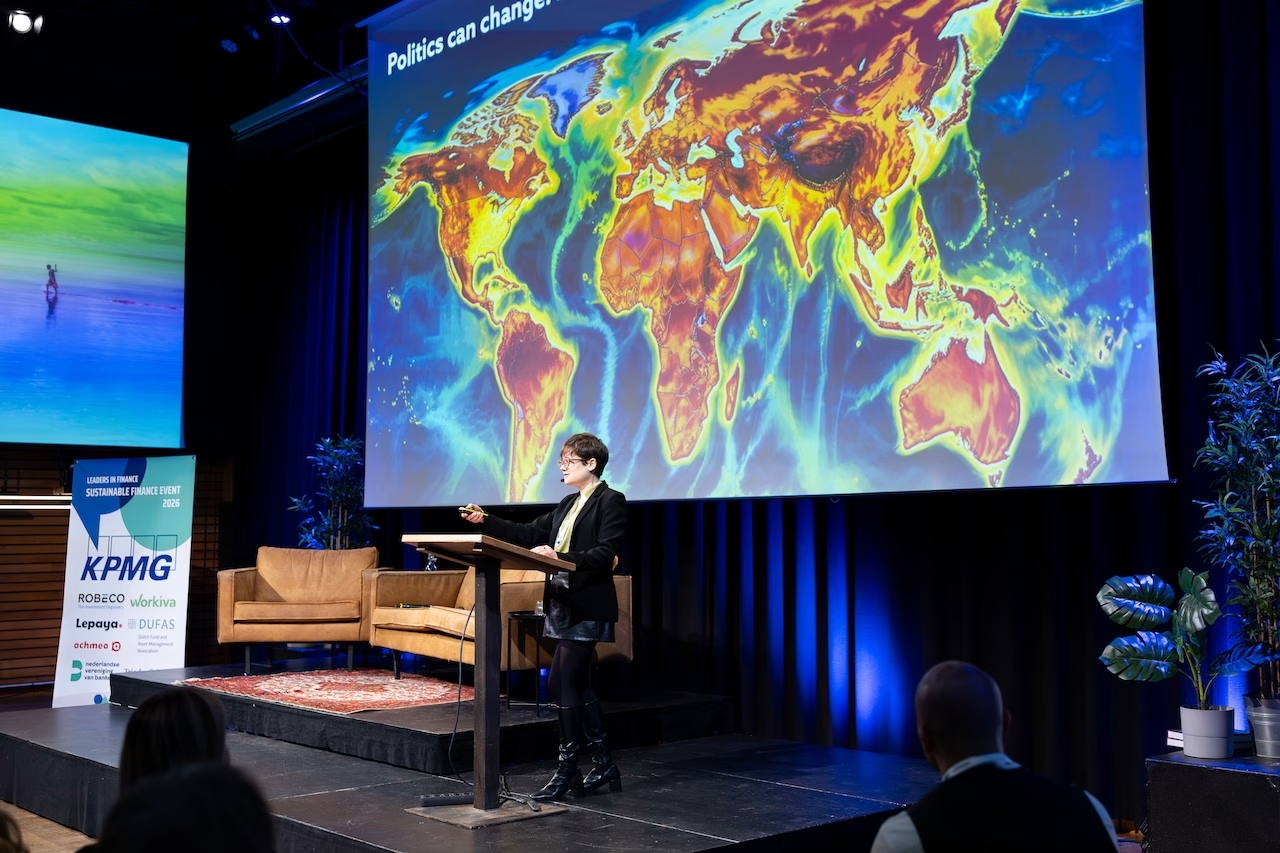
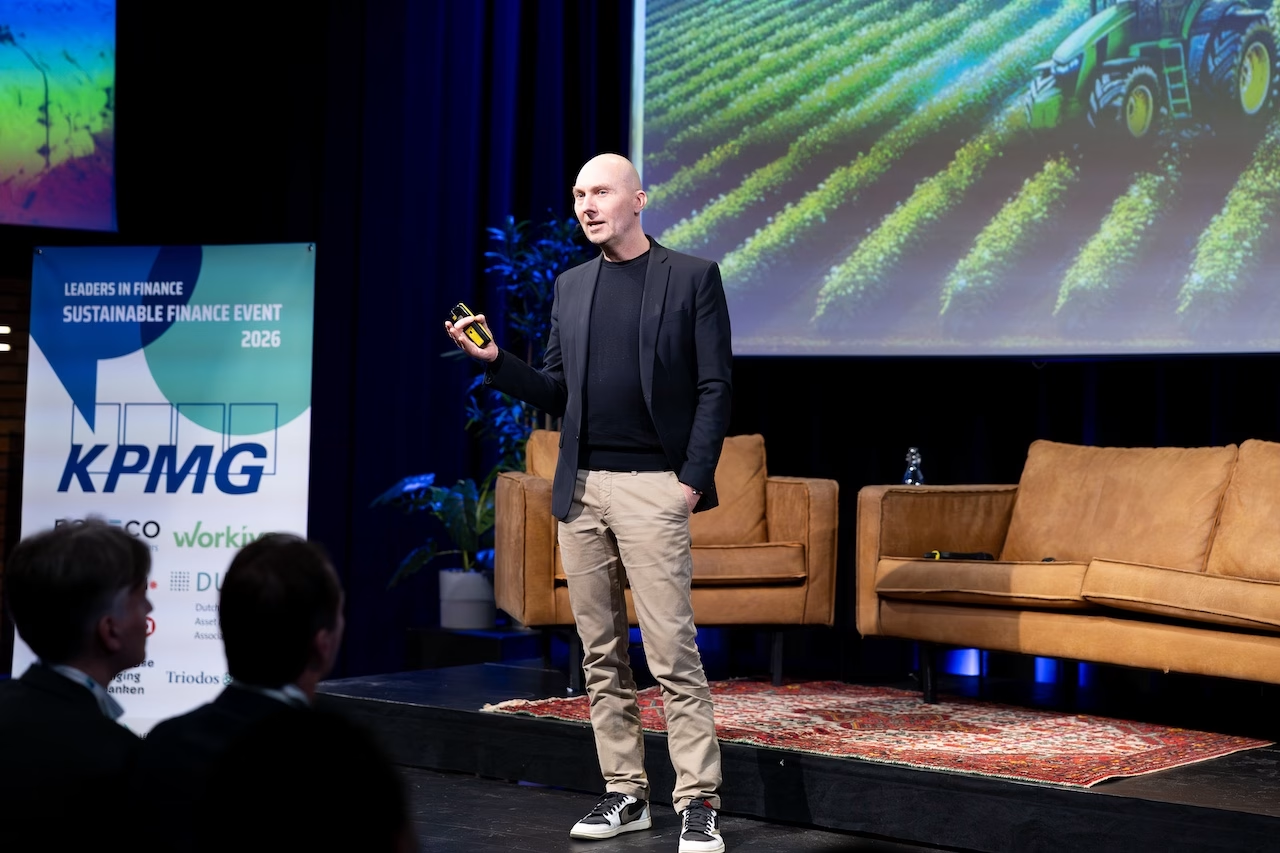
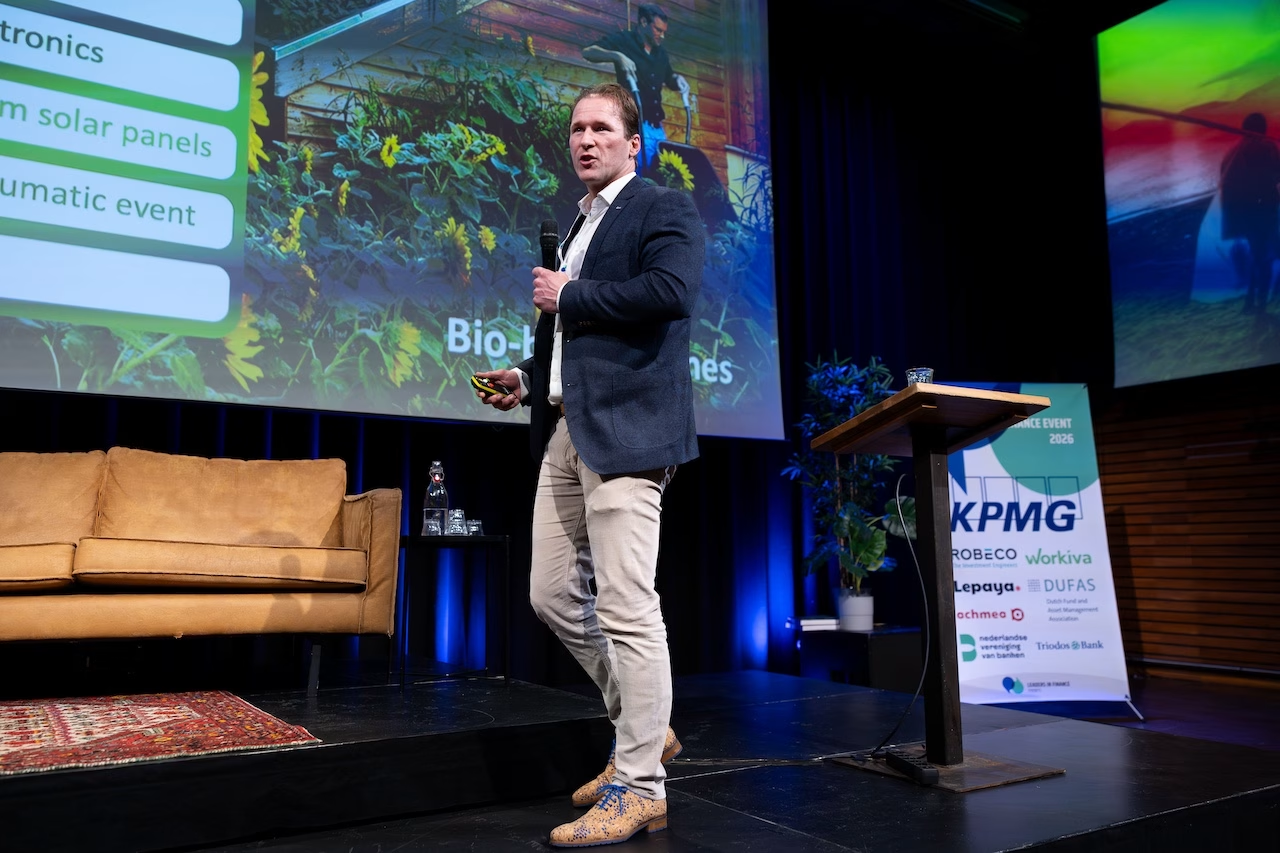
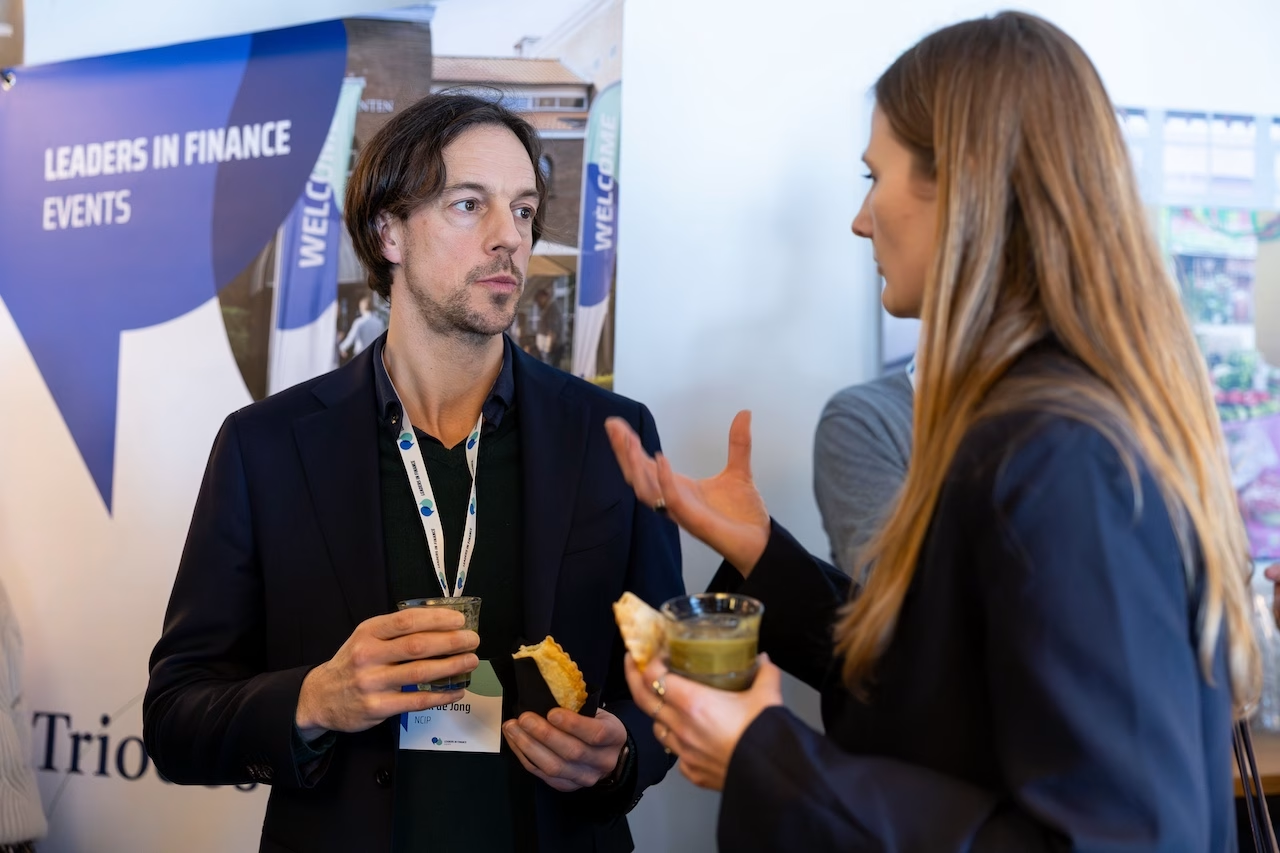
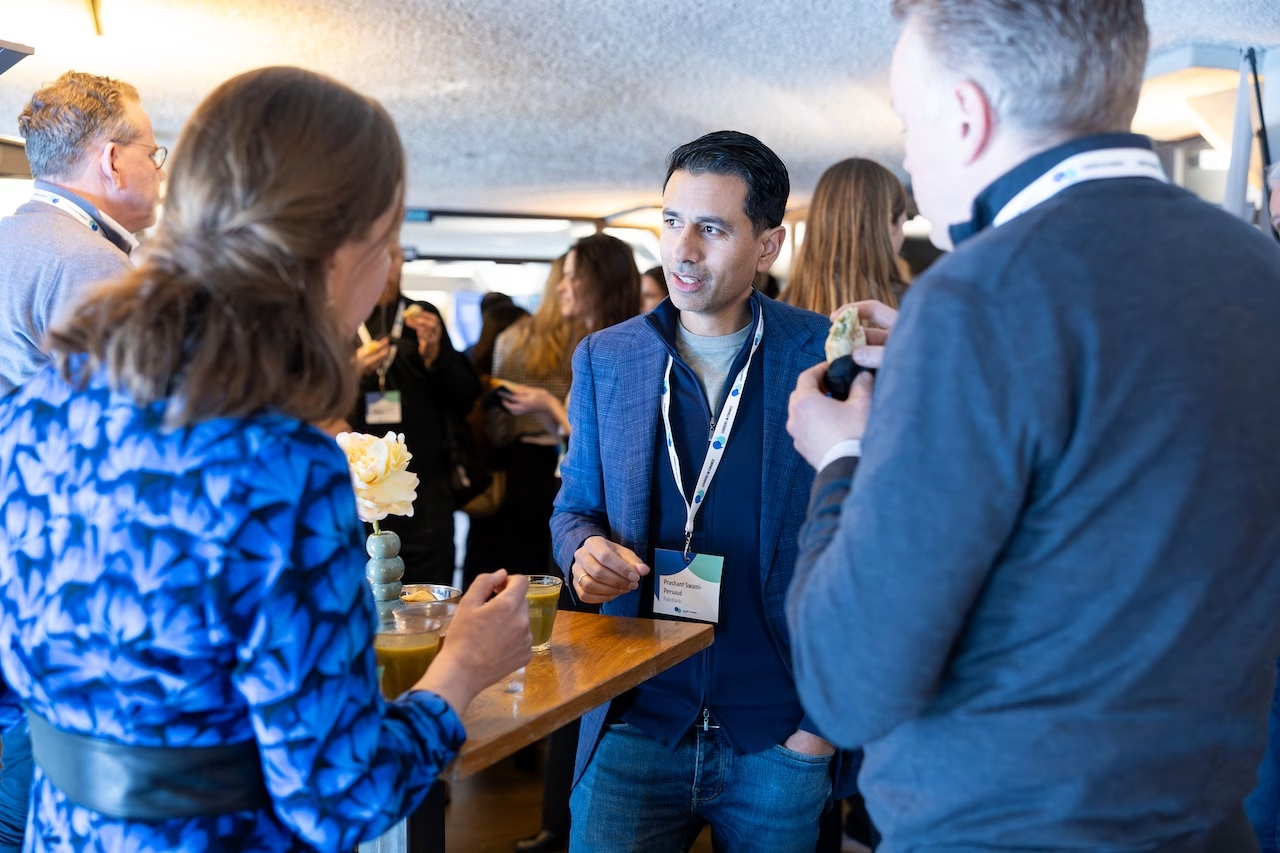
On 29 January 2026, leaders from across the Dutch and European financial ecosystem gathered in Amsterdam for the Leaders in Sustainable Finance Event 2026. The day explored how sustainable finance is evolving in a world shaped by geopolitical pressure, rapid digital change, and rising expectations from society and supervisors. Discussions moved between strategy and execution, with a recurring question in the room: how do we accelerate real world transition while keeping finance credible, competitive, and resilient.
This document summarizes the speeches, interviews, panels and cases at the event. It is not a verbatim transcript, but a paraphrased synopsis of the key points made. It has been prepared and published by Leaders in Finance. Please note that this summary was created with the help of AI tools. While care has been taken to ensure accuracy, the content may contain errors or omissions. For full clarity or specific details, please feel free to contact us at [email protected].
Sustainable finance has become a resilience agenda.
This day made one thing clear: sustainable finance is no longer a separate ESG track. It sits right in the middle of European competitiveness, energy security and geopolitical stability. If you still treat it as a reporting theme, you are already behind.
Credibility now depends on boundaries, not ambition.
Targets are everywhere. The sharper question heard throughout the day was: what will you stop financing, and where do you draw the line? Fossil fuel expansion and nature loss are no longer abstract debates, they are becoming the real test of integrity.
The real blocker is not data. It is risk culture.
Plenty of the conversation circled back to the same frustration: we keep waiting for perfect metrics. Meanwhile the bigger issue is governance, incentives, and the willingness to take transition risk. The sector needs to move from optimising models to changing decisions.
AI is moving from hype to practical leverage.
The strongest AI moments were concrete: faster client insight, better transition conversations, smarter claims and repair, and less siloed work. The message was simple: AI only matters if it speeds up real world decisions, not if it creates nicer dashboards.
Leadership cannot be outsourced to regulators or the “real economy”.
The end of the day landed on a blunt conclusion: finance is already shaping outcomes, whether it admits it or not. Waiting, staying quiet, or hiding behind mandates is also a choice. The institutions that will lead are the ones that use capital, stewardship and their public voice with more clarity and backbone.
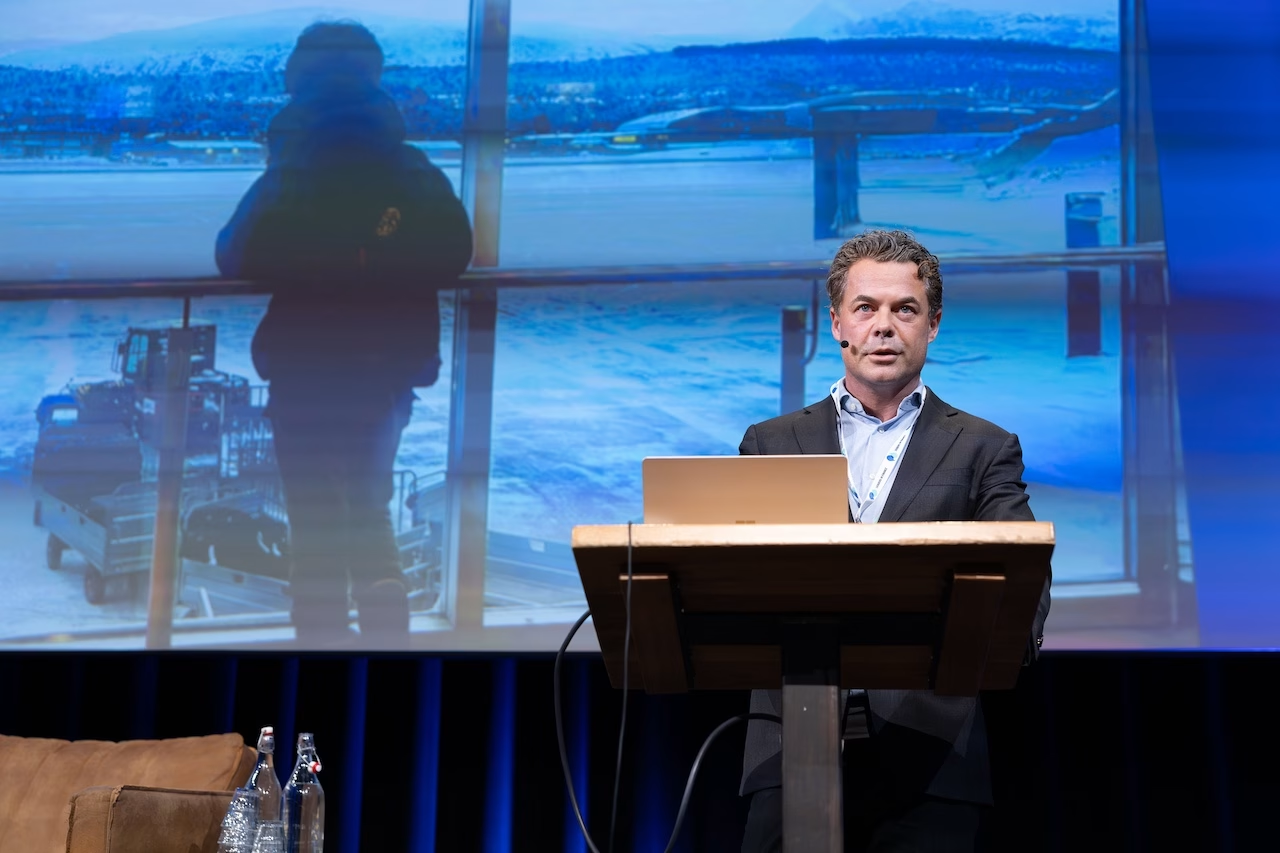
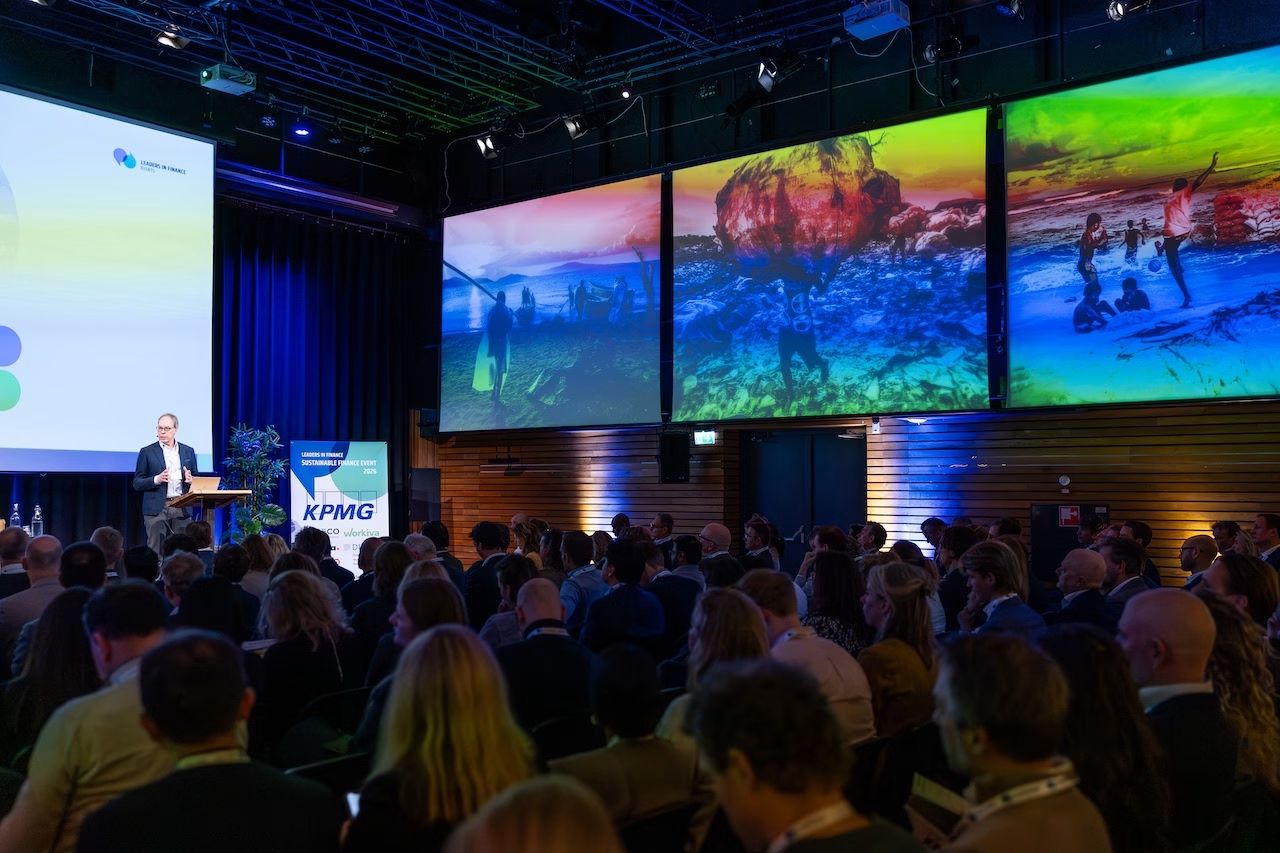
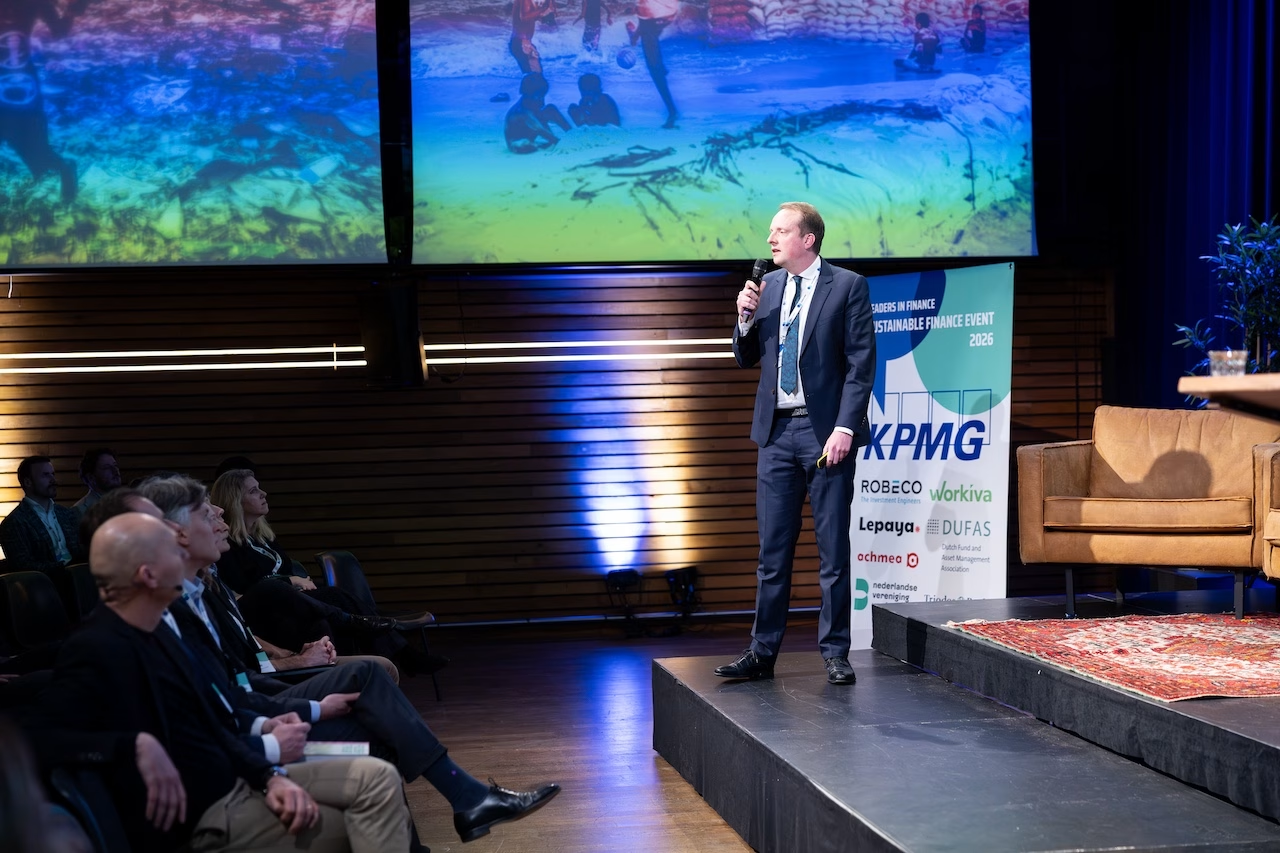
Jeroen van Wijngaarden, Director-General, Dutch Fund and Asset Management Association (DUFAS), opened with a simple image: a child staring out at the snowy mountains of northern Norway, full of promise. It sparked the question behind the day: what world are we leaving the next generation. He noted climate fatigue is rising and support is fragile, with many Dutch citizens prioritising purchasing power over climate. The answer is not less ambition, but smarter delivery. Simplification can help, but only if core goals stay intact. Data and transparency remain essential for trust and good decisions. He stressed the real transition happens in the real economy, citing urgent investment in Dutch electricity grids. His call: engage government proactively, bring practical ideas, avoid cynicism, and lead.
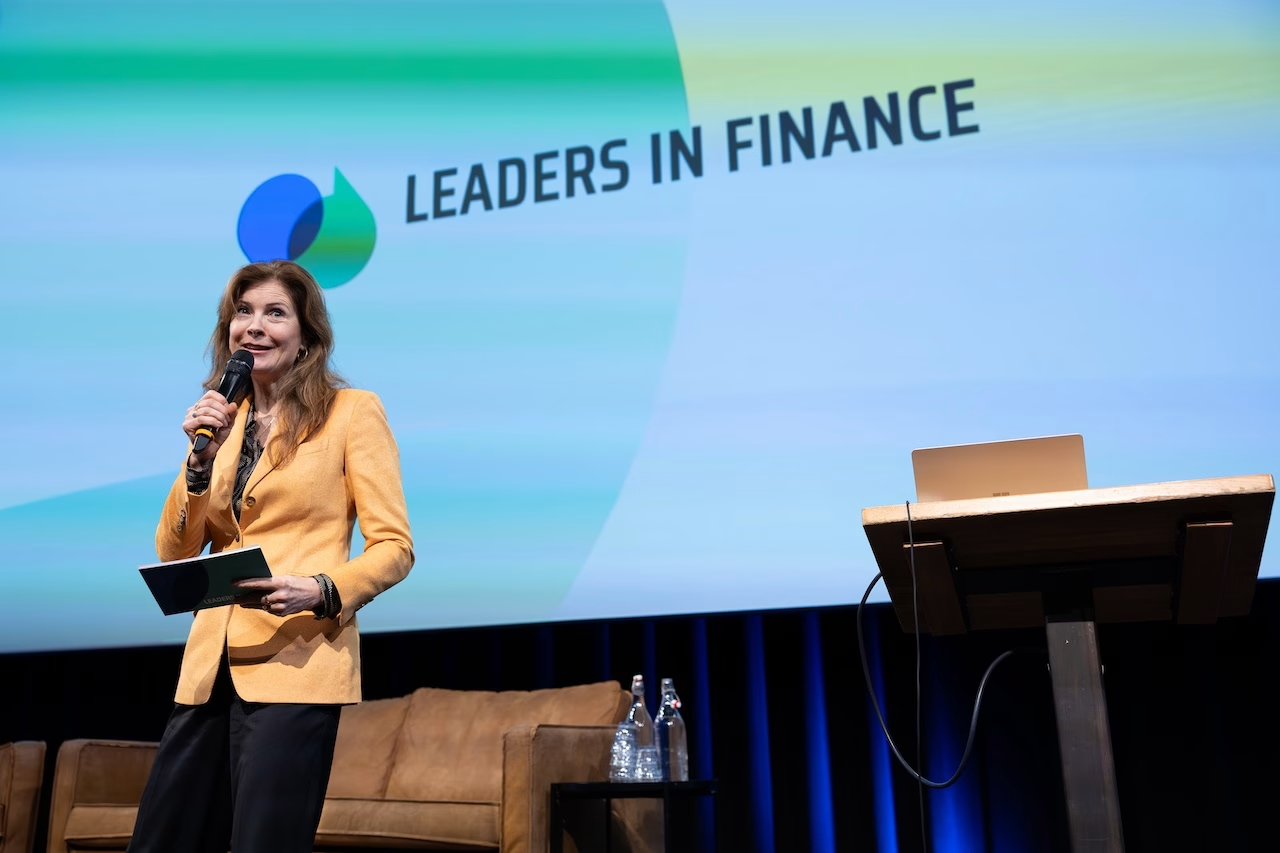
Marcia Luyten welcomed everyone to the fourth Leaders in Sustainable Finance event and highlighted the importance of working together to accelerate sustainable finance in a time of digital and global change. She thanked the partners for making the event possible, noted the strong lineup of financial leaders.
John McCalla-Leacy, Partner, Global Head of ESG & UK ESG Vice Chairman, KPMG, Leacy opened with a clear diagnosis: the transition is still happening, but it is no longer orderly. Geopolitics, trade tensions, wars and extreme weather have scrambled the sequence. His message to leaders was simple: stop waiting for clarity and learn to act in the chaos, because that is where opportunities now sit.
He offered three practical lenses. First: frame today as a disorderly transition, not a rollback. Second: treat sustainability like a complex change programme. The backlash, polarization and “ESG fatigue” are part of the cycle, and the next phase is pragmatism. Third: make it commercial.
Start with profit and EBITDA today, quantify what is at risk, define mitigation, and identify upside. He stressed that many firms still miss concrete value levers such as grants, credits and incentives, and that capturing them requires governance: ownership, controls, ERM integration and capital allocation.
From COP he drew five points: we are off track for 1.5°C and should plan for around 2.5°C; adaptation finance is rising; nature based solutions are moving from rhetoric to investable pathways; the focus is shifting from “transition plans” to ongoing transition planning; and value creation remains the anchor. He closed with a leadership framework: focus on what you can control (projects), influence (standards and coalitions), and monitor (politics, regulation).
Bianca Tetteroo, Chair of the Executive Board of Achmea, made the insurer’s role in the transition very concrete: as climate damage rises, insurability becomes a financial stability issue, affecting mortgages and house prices. Achmea’s response is pragmatic prevention: sharing risk data with municipalities, warning customers ahead of storms, and using drones and AI to assess damage faster and rebuild more resiliently. She also argued that insurers should support the transition by accepting new risks, such as battery storage and hydrogen, even when data is still limited. In the Q&A, she called for more data sharing between insurers and banks, challenging the reflex that “compliance makes it impossible.”
Marcel Zuidam, CEO of Triodos Bank, opened with a stark context: war in Europe, a weakening rules-based order, and growing political pushback against sustainability. His core message was that Europe should not dilute its ambitions to appease unreliable partners. Resilience, prosperity, and credibility require doubling down on sustainability.
He argued that finance is not neutral. It can accelerate the transition by steering capital to the real economy and refusing to fund harmful activities. For the Dutch financial sector, he called this a leadership moment: know where your money goes, keep the financing chain transparent, prioritise long term impact, and stop “extractive” financing.
Two concrete points stood out. He advocated a digital euro to secure European autonomy over payments and protect public values. And he proposed a stronger “guidance regime” where public actors set clearer incentives and boundaries so private capital flows align with societal goals. His sharpest call was to phase out fossil fuel finance, and to act together so governments can follow with regulation.
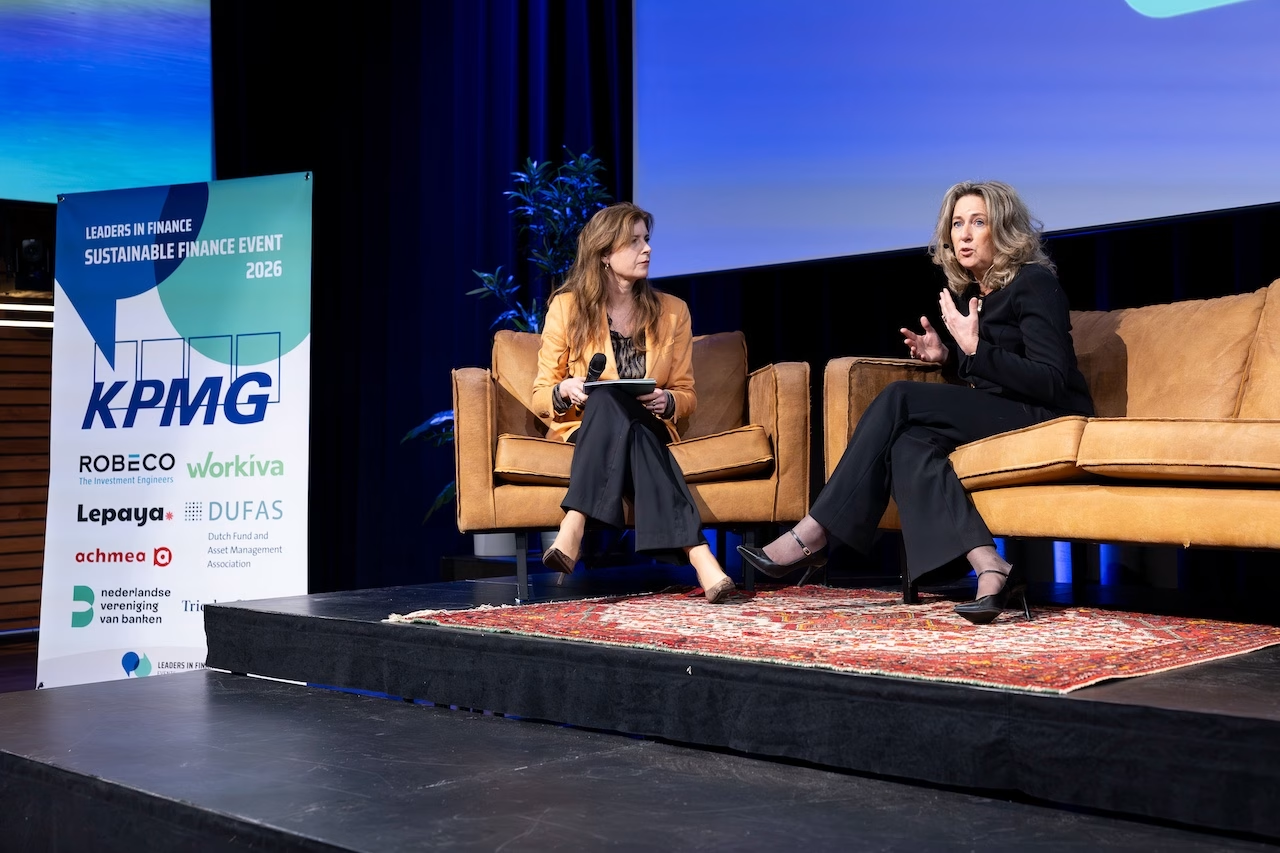
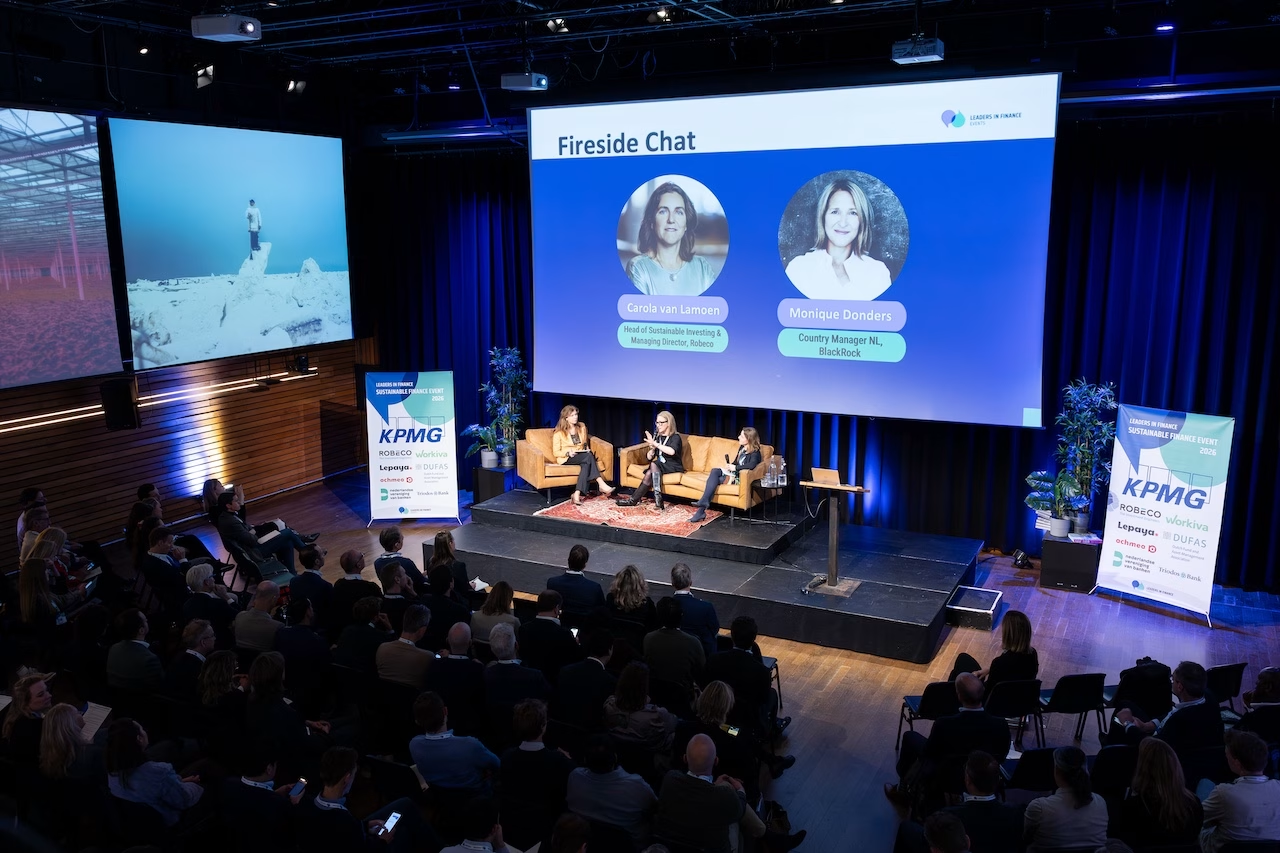
In the fireside chat, Carola van Lamoen, Head of Sustainable Investing & Managing Director, Robeco, and Monique Donders, Country Manager NL, BlackRock, made one distinction clear: asset managers act on behalf of clients. They invest within client mandates, but sustainability still shapes decisions because ESG is treated as material risk and opportunity, supported by data, research and analytics.
Carola explained Robeco’s approach as two levers. First, integrating ESG consistently in investment decisions through in house frameworks, including a climate “traffic light” that flags companies as aligned, amber, or misaligned with the transition.
Second, stewardship: using engagement and voting power together, escalating when companies do not move. Monique added that scale matters: large asset managers can get a seat at the table, and they also have a role to inform and advise clients, not just follow instructions.
A key tension was “decarbonising portfolios” versus financing real economy transition. Moving away from heavy sectors can lower portfolio emissions, but the harder work is identifying the winners within oil and gas, steel, and cement as they transition. Their sharpest dilemma was big tech: huge returns, but high energy use and political risks. Their answer was pragmatic stewardship, collective engagement, and voting against governance risks.
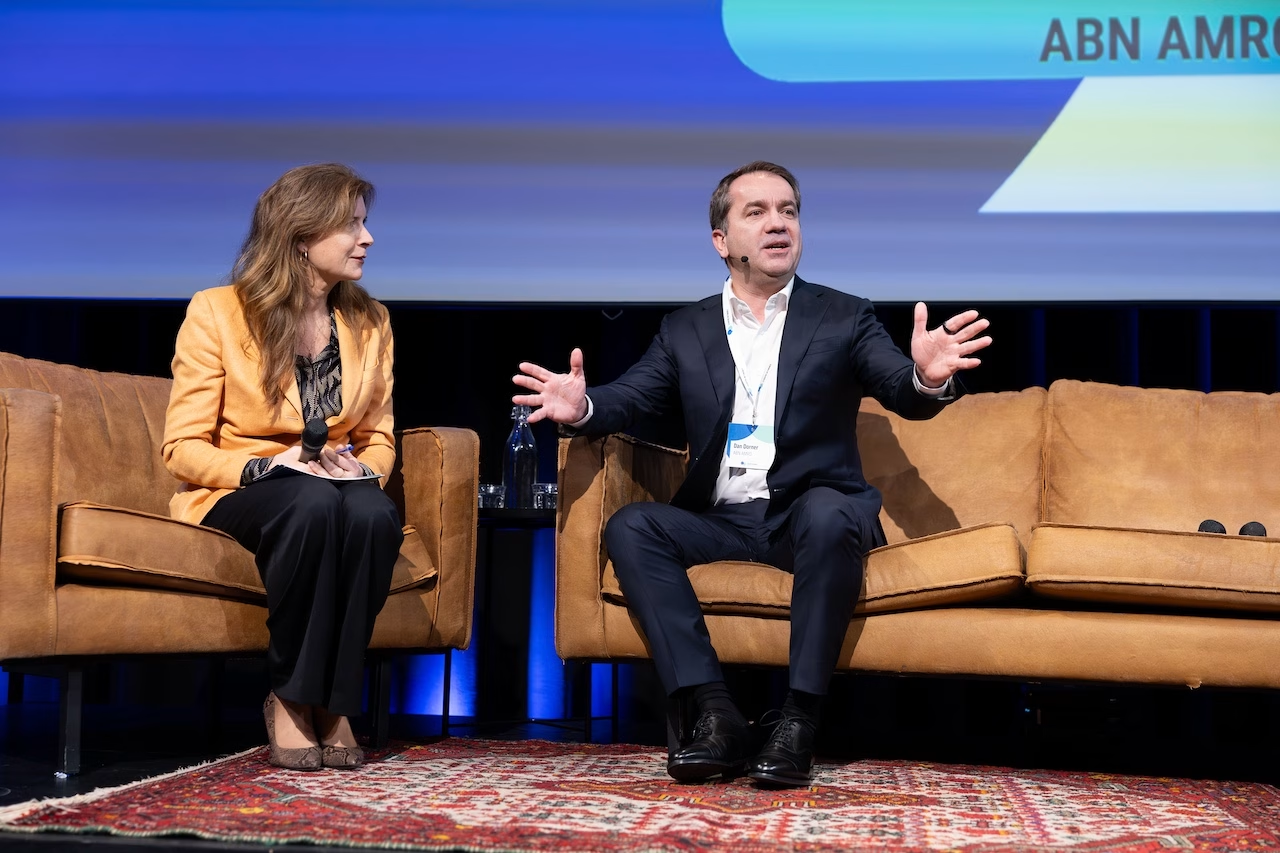
Dan Dorner’s, Member of the Executive Board, ABN AMRO, core message was that Europe’s transition will only succeed if it stays competitive and resilient, and that requires investment at scale. From Davos he highlighted three pressures shaping the agenda: AI as both strategic value and risk, the need for decisive top-down leadership, and urgency to strengthen European resilience while transitioning. ABN AMRO connects sustainability to four European transitions: energy, digital, mobility, and defence. He shared concrete examples. ABN AMRO’s project finance portfolio is around €10bn, with roughly half in renewables.
But the bottleneck is increasingly the system, not generation, especially grid congestion and the lack of clean, secure, affordable power for industry. That is why the bank is focusing more on enabling infrastructure and flexibility, notably storage. He noted ABN AMRO has financed 4.4 GW of battery projects across five European countries, and is expanding into hydrogen, geothermal, and geothermal based lithium production. He acknowledged the key challenge is risk and regulation: transition technologies carry higher execution risk and capital charges, but the bank is prepared to take that risk to support client decarbonisation. On fossil fuels, he referred to an absolute reduction target for upstream exposure and a broader value chain approach.
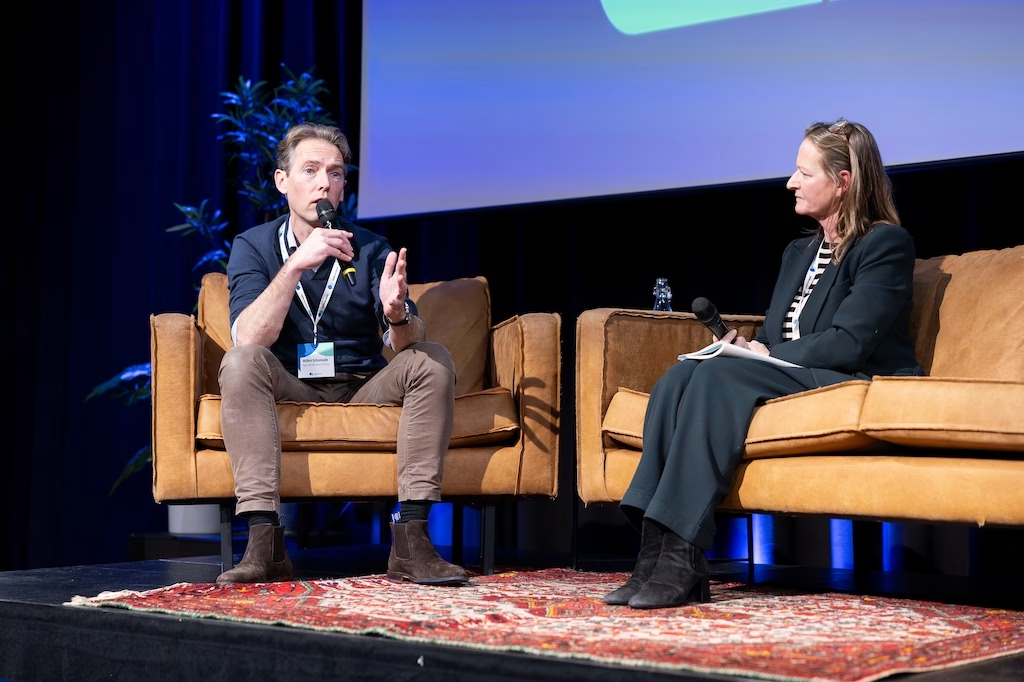
Willem Schramade, Professor of Finance and Sustainable Investing Advisory at Nyenrode Business University, and Karen Maas, Professor of Accounting and Sustainability at the Open University and Director of Impact Centre Erasmus at Erasmus University, challenged the room to move from optimisation to outcomes. Their core point was that the sector often improves frameworks and reporting, but still avoids the harder question: are we creating real world impact for people and nature?
Karen argued that waiting for perfect data becomes an excuse, and that institutions should act, measure, and iterate.
Willem agreed that ESG can strengthen investment decisions, but said better outcomes may require longer time horizons, different risk definitions, and governance that allows impact to be a genuine objective. He pointed to pension funds as an example: capital is available, but strict mandates and delegated manager criteria can block investment in innovation. Their shared takeaway was clear: remove internal bottlenecks, stop hiding behind models, and make impact a real decision driver.
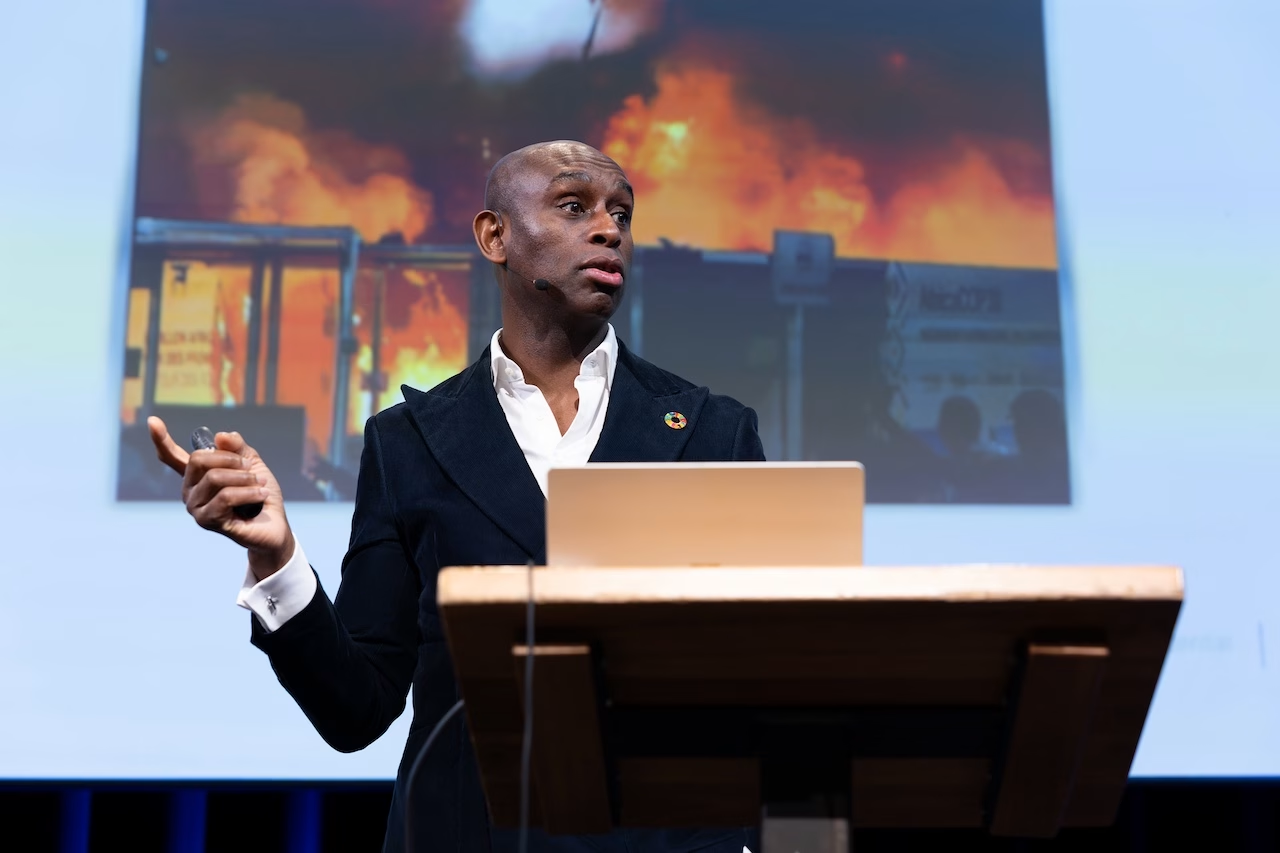
Lucie Pinson, Founder and Executive Director, Reclaim Finance, gave the day’s blunt reality check. Climate losses insured each year now exceed €100bn, and that has become the baseline since 2020. The costs do not sit with insurers. They cascade through the whole economy and the entire financial system.
Her message was threefold. First, pausing climate action does not protect competitiveness. It multiplies costs. A “manageable” 3°C world is a dangerous illusion because models miss tipping points and cascading failures. Second, the backlash is louder than the public mood, and supervisors have not paused.
Climate and biodiversity are increasingly treated as core financial stability issues, with real regulatory consequences, not symbolism.
Third, finance cannot claim neutrality. Capital shapes the real economy. Saying “the economy must move first” is a denial of responsibility.
Her call to action was specific: stop fossil fuel expansion, especially LNG, close loopholes between project and corporate finance, treat high biodiversity areas as red lines, and align action across the whole chain. Asset owners, she argued, should use mandates and capital withdrawal to force managers to align. Her closing challenge: you know this, so will you act?
Roland van der Vorst, Head of Innovation Wholesale and Rural, Rabobank, and CEO, Rabo Carbon Bank, opened with a warning: technology can reinforce the mindset we already have. AI can lock institutions deeper into dashboards, or help them rethink value, risk, and progress. He outlined practical uses of AI for sustainability across three areas: precision (better targeting to reduce waste), chain intelligence (more transparent supply chains to manage scope 3), and prediction (forecasting sustainability outcomes, not only financial ones). His most concrete example was Rabobank’s move from rough proxies to location-based insight. By mapping client land and collateral using GPS polygons, the bank can assess climate risk more precisely and use that to steer decisions and incentives.
His broader message was about purpose: the opportunity is to use AI to improve how capital, goods, and information flow through value chains, so the real economy becomes more efficient and more sustainable.
Michel van Leuven, Lead Sustainable Repair at Nationale Nederlanden, showed how insurers can enable the transition by making new risks insurable. At Nationale Nederlanden, that includes practical coverage choices, plus a repair first approach that supports circularity. AI helps by speeding up claims through smarter triage and routing, keeping costs and premiums under control, while also raising the need for stronger fraud detection.
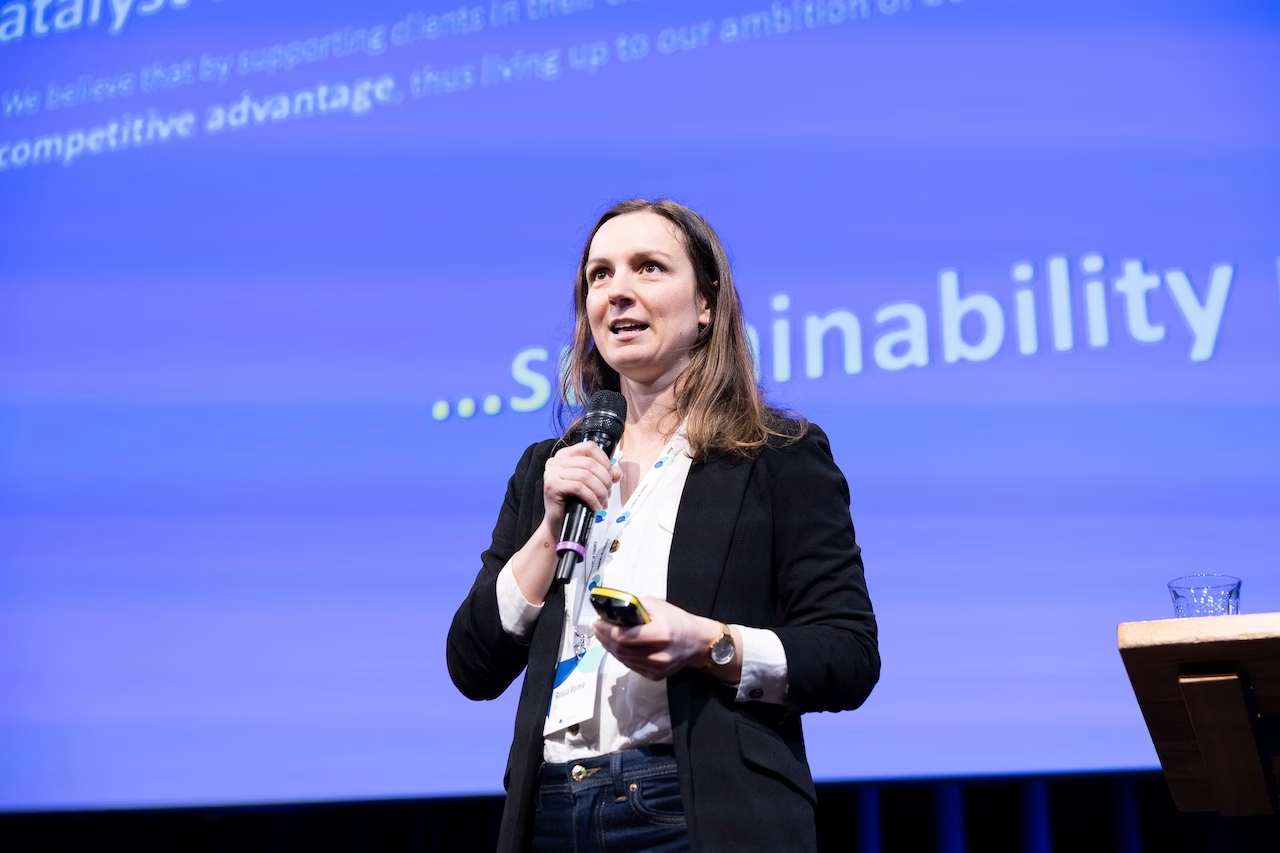
Raluca Voinea, Product Lead ESG Client Engagement and Transition at ING, focused on using AI to make transition plans actionable in client conversations. ING’s challenge is that action plans sit in long, unstructured texts, and relationship managers lack the time to extract what matters. Their AI approach flags what is missing or vague, adds context, and generates practical follow up questions, helping move from reporting to insight and from insight to financing, provided teams stop working in silos.
Michiel van Esch, Head of Voting and Director of Active Ownership at Robeco, discussed AI in stewardship. With thousands of votes each year, Robeco uses AI trained on its voting policy and past communications to draft clear feedback at scale. The goal is not to replace judgment, but to free up time for the human work that drives impact: preparation, escalation, and tougher engagement with companies.
Together, the cases underlined one message: AI matters only when it makes sustainability more insurable, more investable, and more enforceable in day-to-day decisions.
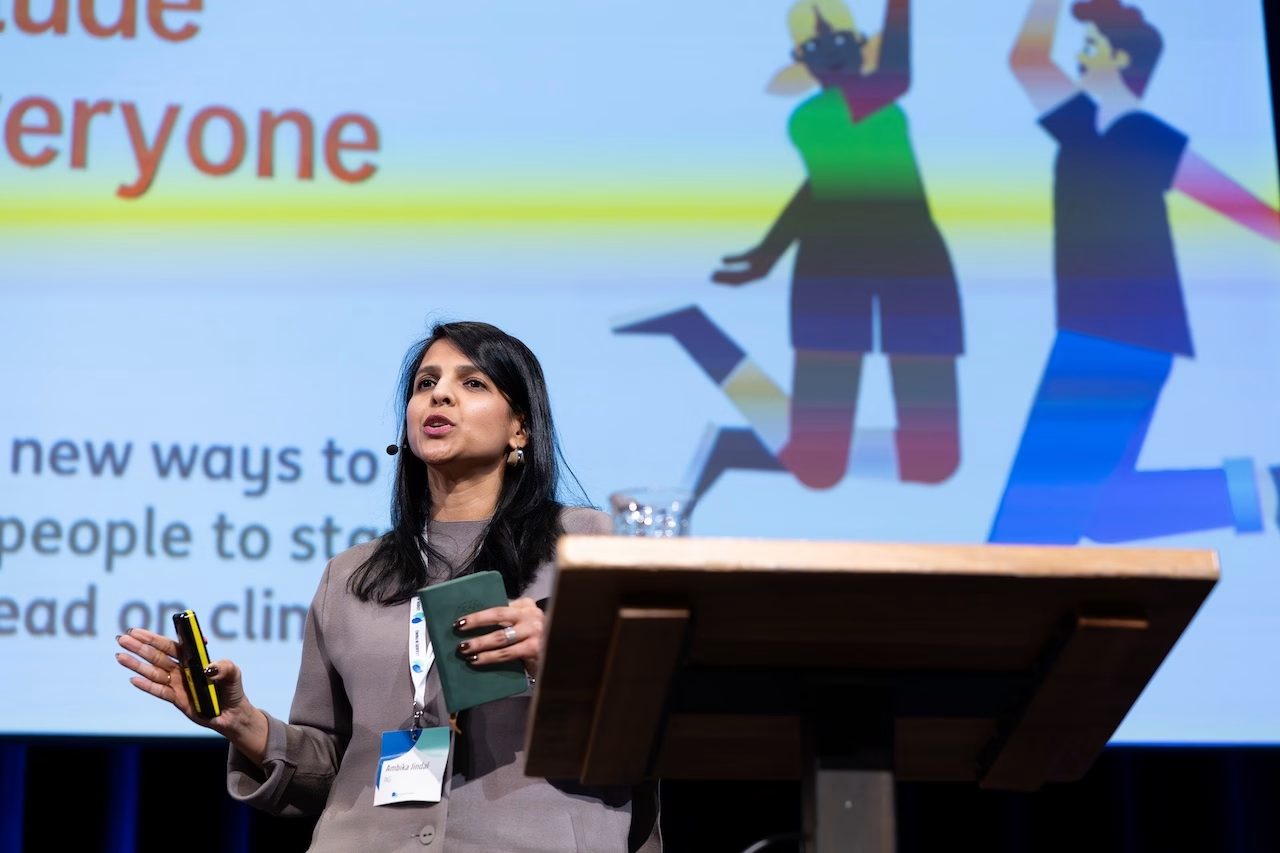
Ambika Jindal, Global Head of the Systemic Change Accelerator at ING, closed the morning with a simple message: net zero will not happen by reporting harder, but by building faster.
She explained ING’s approach in three moves: cut emissions, scale the new (renewables, storage, new fuels, circular materials), and make the transition fair so households and smaller players are not left behind. Her emphasis was on “build up”: new solutions need early risk taking, better deal structures, and policy certainty. If projects face delays and cost overruns and nobody shares the risk, nothing scales. She also pushed a communication point: sustainability language has become too complex.
If people cannot see the personal benefit, trust collapses. Her examples were deliberately concrete, like helping homeowners retrofit through a one stop mortgage upgrade path rather than excluding them.
Uniting the financial sector by discussing pressing topics and enhancing cooperation. That’s what we love to do at Leaders in Finance. By listening, learning, and connecting with others, we accelerate the sharing of ideas, thus powering (upcoming) leaders and organizations to shape the future of financial services.
Want to explore how we can benefit your organizational goals? We’re happy to meet and discuss opportunities. Each part of the Leaders in Finance Group has its unique approach. Want to explore how we can benefit your organizational goals? We’re happy to meet and discuss opportunities.
We’d love to keep you informed on the next iterations of this event. Please enter your details below, and we’ll keep you posted!