
Summary Leaders in Finance HR Event 2025
Looking to be part of next year’s event?
Join our waiting list to stay informed—we’ll only reach out twice a year with key updates.
The Leaders in Finance HR Event on 19 June 2025 gathered HR leaders, CHROs, and finance professionals for an honest conversation about what it means to lead people in a time of AI and constant change. The discussions circled around one central question: how do we keep work human while technology moves faster than ever? From rethinking the role of HR at the board table to redefining purpose and inclusion, the event showed that the future of work is not just about adapting to new tools — it’s about staying true to what makes us human.
This document summarizes the interviews, panels and speeches at the event. It is not a transcript of what was said, but provides a paraphrased synopsis of the key points made. It has been prepared and published by Leaders in Finance. Please note that this summary was created with the help of AI tools. While care has been taken to ensure accuracy, the content may contain errors or omissions. For full clarity or specific details, please feel free to contact us at [email protected].
Key takeaways
● “The future of work is human… or is it?” – Janine Vos (Rabobank), opened the event by challenging her own mantra. “Yesterday night I changed it into a question mark. Is the future of work human?” she asked. Vos urged HR leaders to confront both the dystopian and utopian visions of AI’s role in the workplace: “We live in a paradoxical world where you need both states to stretch thinking about the future of work.”
● A call for ‘pockets of hope’ amid rapid AI transformation – Despite acknowledging that “AI is becoming more and more human, and we’ve become more inhuman,” Vos called for optimism and human connection. “Raise your vibrations,” she said, adding that HR must “speak up around the future of work” and “advocate for people in the organization — because if we don’t, who will?”
● From process to purpose: redefining HR leadership – The discussion repeatedly emphasized HR’s evolving place at the decision-making table. The speakers stated, without knowledge on AI you cannot lead. Yet, equally, without humanity you should not lead either. This balance between technical understanding and human empathy defined the day’s theme.
● CHROs as strategic partners — and potential CEOs – Suzanne van Niekerk-de Veld (ABN AMRO) emphasized, “We are at the table.” She highlighted that understanding business complexity and “talking their language” are essential for HR to be a true strategic partner. Iman Eddini (DLL) shared her own journey: “With everything I proposed, the answer was ‘yeah, but first we focus on the business.’” Her breakthrough came from “understanding the business model very well” and using that knowledge to anchor HR at board level.
● Purpose and inclusion as the new strategic anchors – Panelists agreed that digitization is key — but not enough. “Purpose is something that will become more and more relevant in corporate strategies,” Eddini stressed. “We are as humans wired to seek belonging… to contribute to something that is bigger than ourselves.” This idea — echoed throughout the event — tied the technological and human sides of transformation together: HR’s role is not only to adapt, but to ensure the future of work remains meaningfully human.
Keynote and Q&A – Janine Vos (Managing Board Member & CHRO, Rabobank)
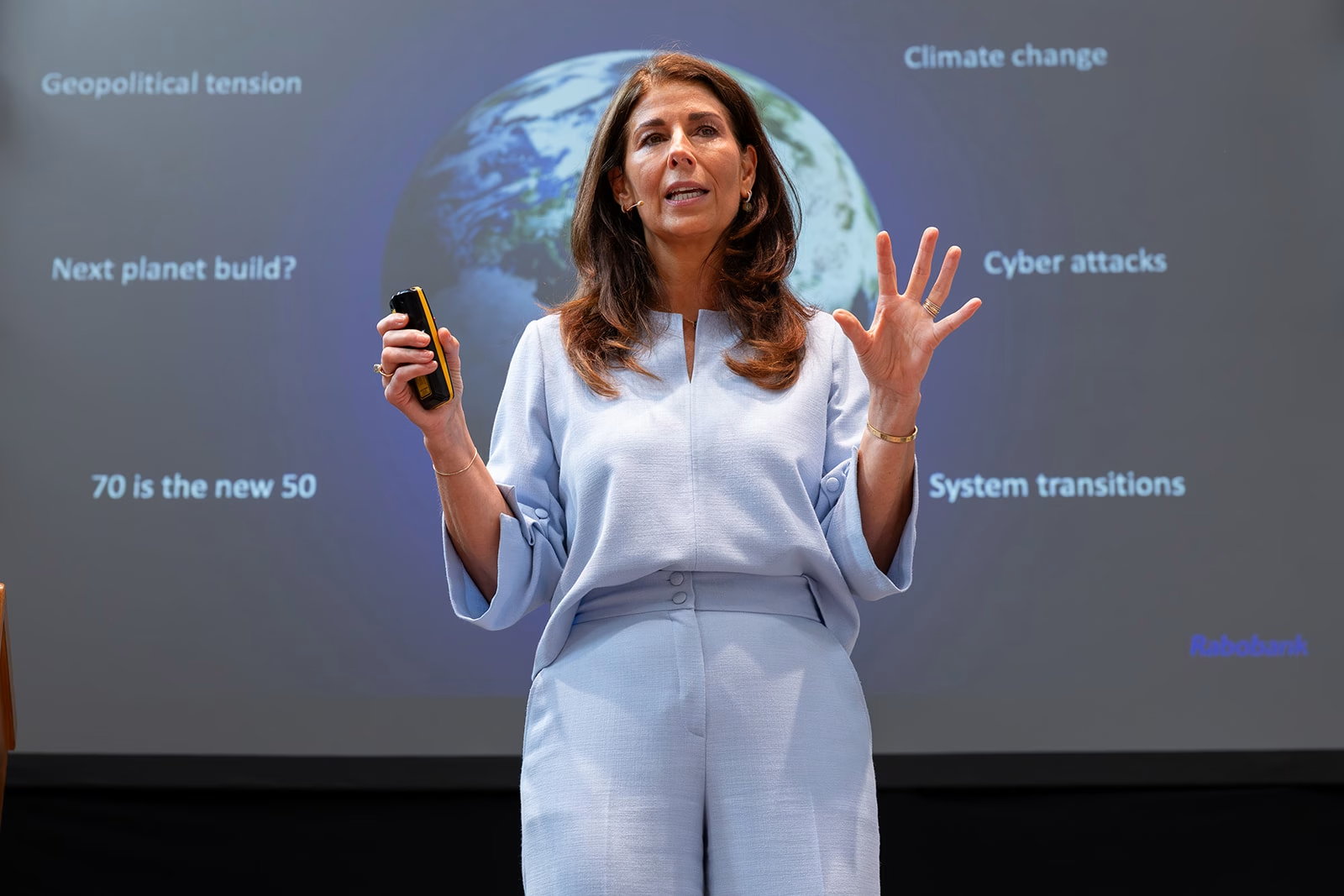
In an energetic and reflective opening keynote, Vos challenged the audience to rethink the role of people and leadership in an era of accelerating AI. Known for her people-first philosophy, she began by reframing her signature statement: “The future of work is human.” Now, she added a question mark — “Is the future of work human?”
Vos explored two possible futures: a dystopian world without human judgment and a utopian world where humans thrive alongside technology. She pointed to the emerging “BANI world” — brittle, anxious, nonlinear, and incomprehensible — and urged HR leaders to help employees navigate this environment.
Discussing workplace transformations, Vos highlighted four major trends: a shrinking productive workforce, rising complexity, the need for an inclusive workspace, and the accelerating impact of AI and automation. At Rabobank, over 30,000 employees are now using Copilot, and the bank is already experimenting with agentic AI, systems capable of acting autonomously. Vos reflected: “AI will go without a human in the loop… The next phase is that AI is doing its own judgment — and it’s already happening.”
Vos warned that “people become more inhuman, and AI is becoming more human.” Using examples from Rabobank’s contact centers and HR systems, she showed how efficiency gains risk leading to burnout and dehumanization. Her message to HR professionals was clear: “If there’s a moment to speak up around the future of work, it’s now, as CHROs and workforce professionals”
Looking ahead, Vos called for a new generation of HR leaders — technically fluent and emotionally intelligent. “If you don’t know anything about AI, if you are not willing to deepen, you should not lead,” she said, while also insisting on empathy and authenticity. Her closing call to action was both human and hopeful: “HR leaders are not naturally inclined towards technology and AI. That is not why we chose this craft. But if you would like to lead, you should know something about it. And if you want to understand API and HR, if you want to simplify things, you should understand its complexity.”
Panel I – ‘How can a CHRO play a key role in the company strategy – and be seen as a potential future CEO?’
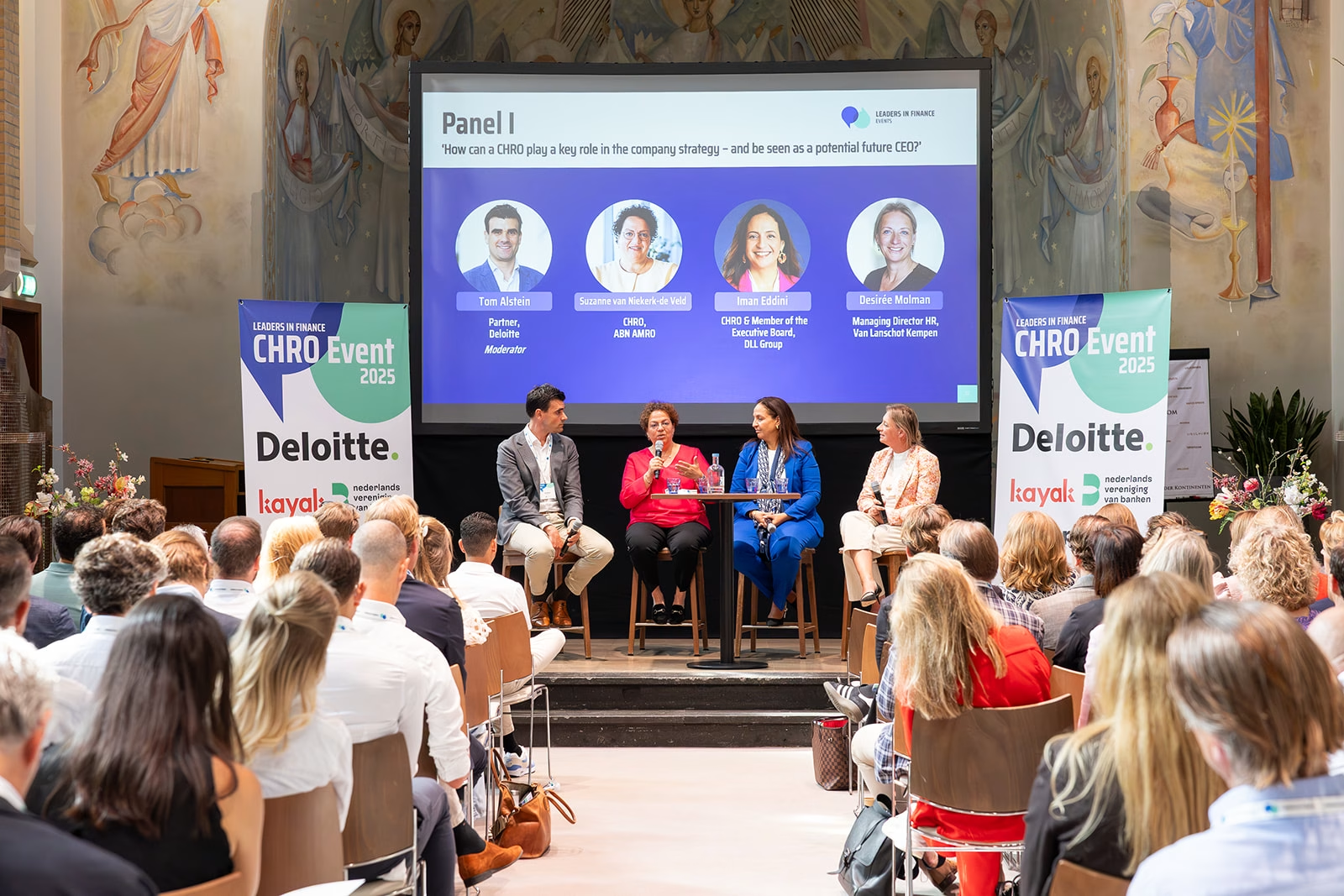
Panelists: Tom Alstein (Moderator & Partner, Deloitte), Suzanne van Niekerk-de Veld CHRO, ABN AMRO), Iman Eddini (CHRO & Member of the Executive Board, DLL Group) & Desirée Molman (Managing Director HR, Van Lanschot Kempen).
This dynamic panel explored how CHROs can evolve from people leaders into true strategic partners — and even future CEOs. Moderator Tom Alstein structured the discussion through the lenses of three CHRO personas: the strategist, the organisation and capability builder, and the chief transformation officer.
Van Niekerk-de Veld emphasized that whether HR’s strategic role is embedded in the future of an organisation is no longer up for debate: “We are at the table.” For her, being a true partner means understanding business complexity and “talking their language.” The challenge, she said, lies in bridging the gap between data-driven stakeholders and employees: “You need to understand the numbers and use them to let employees engage on your topics.” Van Niekerk-de Veld explained how it is essential to understand and balance human capital, and have it at the front in your answers on how to lead a strategy and ultimately gain targets.
Eddini described how she elevated HR’s voice when joining the board of DLL: “The organization was not used to HR being at board level… there was no people strategy.” By mastering the business model and customer data, she gained credibility: “you need to understand the business and the value drivers in order to be a sparring partner at a strategic level.” She also highlighted DLL’s culture of calling employees members — a term that strengthens belonging and engagement.
Molman stressed the power of analytics: “Data helps us to get the recognition of who HR is, but also to make it obvious on which trend there is going.” She uses workforce data to identify diversity gaps and drive faster decisions: “Data helps us know where we are at times now and where our vacancies are limited. And acting now is more important than seeing the results in a few months and then being too late.”
The panel agreed that digitalization and purpose must be deeply embedded in corporate strategy. “We start with humans,” said van Niekerk-de Veld, while Eddini added, “We as humans seek for belonging, we seek for record. We want to be part of something that is bigger and contribute to something that is bigger than ourselves in a meaningful way”
As transformation leaders, the CHROs called for courage and speed. “When you do transformation, you turn from a caterpillar to a butterfly, right? So it doesn’t go back to the caterpillar. And most of the companies look at change as if you can turn it around again,” said van Niekerk-de Veld. Eddini was more direct: “I don’t think the sense of urgency in our industry is that high or that the speed of transition is high enough.”
In closing, each shared advice for future HR leaders: balance capital and human capital, stay true to yourself, invest in your own resilience and stay connected. Alstein concluded the panel by pointing to the core of HR: “Organizations are in essence social systems — and we are the social systems experts.”
Panel II: ‘Driving the digital (AI) agenda: ‘What is needed from HR to become a pioneer in implementing and supporting digital (AI) solutions?’
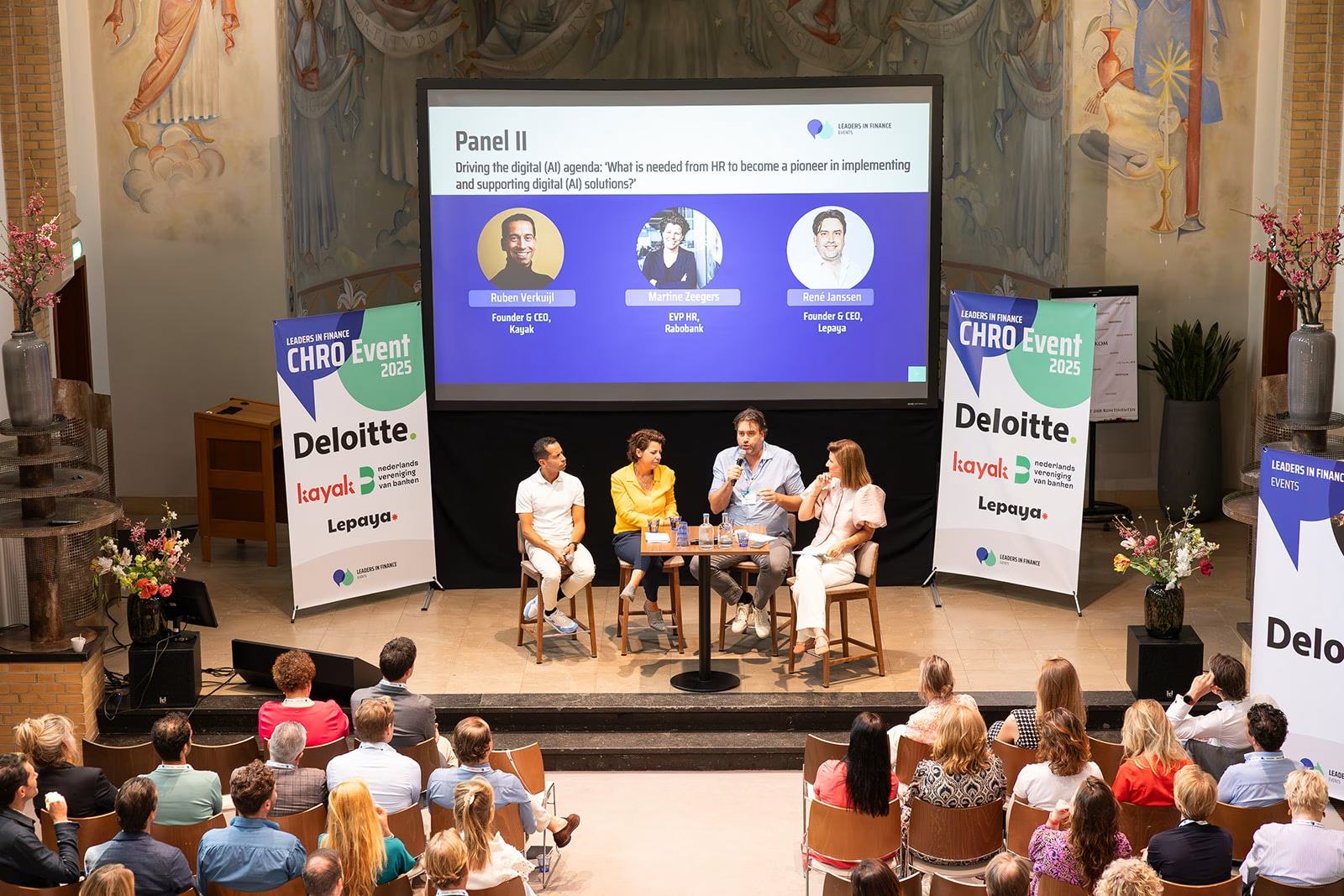
Panelists: Ruben Verkuijl (Founder & CEO, Kayak), Martine Zeegers (EVP HR, Rabobank) & René Janssen (Founder & CEO, Lepaya).
The morning continued with a vibrant and forward-looking discussion on AI’s impact on work, leadership, and culture. Marije Tolsma-Groen opened by reminding the audience that while AI is often discussed in terms of tools and automation, the real question is how organizations—and especially HR—can lead the transformation it demands.
Verkuijl set the tone with an energetic call to action: “Go out and venture. Go experimenting with AI tools.” He described the current moment as “a radical shift powered by AI”, aligning with Bill Gates’ prediction that we might see a two-day work week within a decade. Over the past 16 weeks, Verkuijl personally immersed himself in AI—without prior coding experience—learning to build his own software. His message was clear: HR professionals must experiment first-hand to stay relevant. “As HR, our responsibility is growth, and our responsibility is to prepare the entire workforce of your organization for the future,” he said. “The growth strategy is not about cutting jobs, but changing jobs. When everybody within the organization uses AI, it will, okay, we get more efficient, get more productive. But then the interesting part starts. We will have more room for personal connection, more room for touch points.”
Moving to a large corporate perspective, Zeegers from Rabobank brought in both realism and optimism. While acknowledging that many organizations feel the impact of AI but don’t yet know what or how, she emphasized that readiness starts with HR itself: “Go out there, experiment, get it and understand what you’re talking about. Because if we don’t understand, we’re off the hook immediately. There is no playing field for us.” Zeegers outlined three layers of AI adoption in HR: first, using AI internally; second, integrating AI into HR tools and systems; and third, supporting the wider organization through the transformation. At Rabobank, this means targeted pilots and business cases—starting in areas like call centers—while balancing acceleration with empathy. “In the role of HR is that we need to accelerate and break at the same time. Accelerate and push the business in, but how do we do it in a human way?” she said. “It’s not only about efficiency—it’s about change.”
Janssen shifted the focus from technology to people. “ AI isn’t just a tech topic. It’s also a skills challenge,” he argued. He drew a distinction between efficient AI, which automates tasks, and augmenting AI, which enhances human capability: “suddenly those people who struggle to talk with other people, need to collaborate hand-in-hand with an AI agent. That’s fundamental.” According to Janssen, organizations must define which skills they need to retain or strengthen—especially in areas where human value adds most. He identified three: networking and connection, critical thinking, and storytelling. “We need to bring our colleagues along. We need to bring our clients along. We need to bring everyone along.” he said. “As long as we are still humans. And I think we are.”
Across all three perspectives, the message converged: HR must lead AI transformation by example. Verkuijl urged attendees to “go discover” and shared a new website with 29 HR AI tools across seven domains. Zeegers encouraged HR teams to “build their muscle, how AI will impact and understand the organizational needs.” Janssen closed with a strategic vision: “Be T-shaped. We have to work on the fundamentals. Redesign the future, work backwards. That is where our organizations will prosper.” The panel ended on a note of both urgency and empowerment: AI will transform organizations—but only humans can make that transformation meaningful.
Speech: Emma Agricola (Diversity & Inclusion Specialist, INCLUSYOUNG)
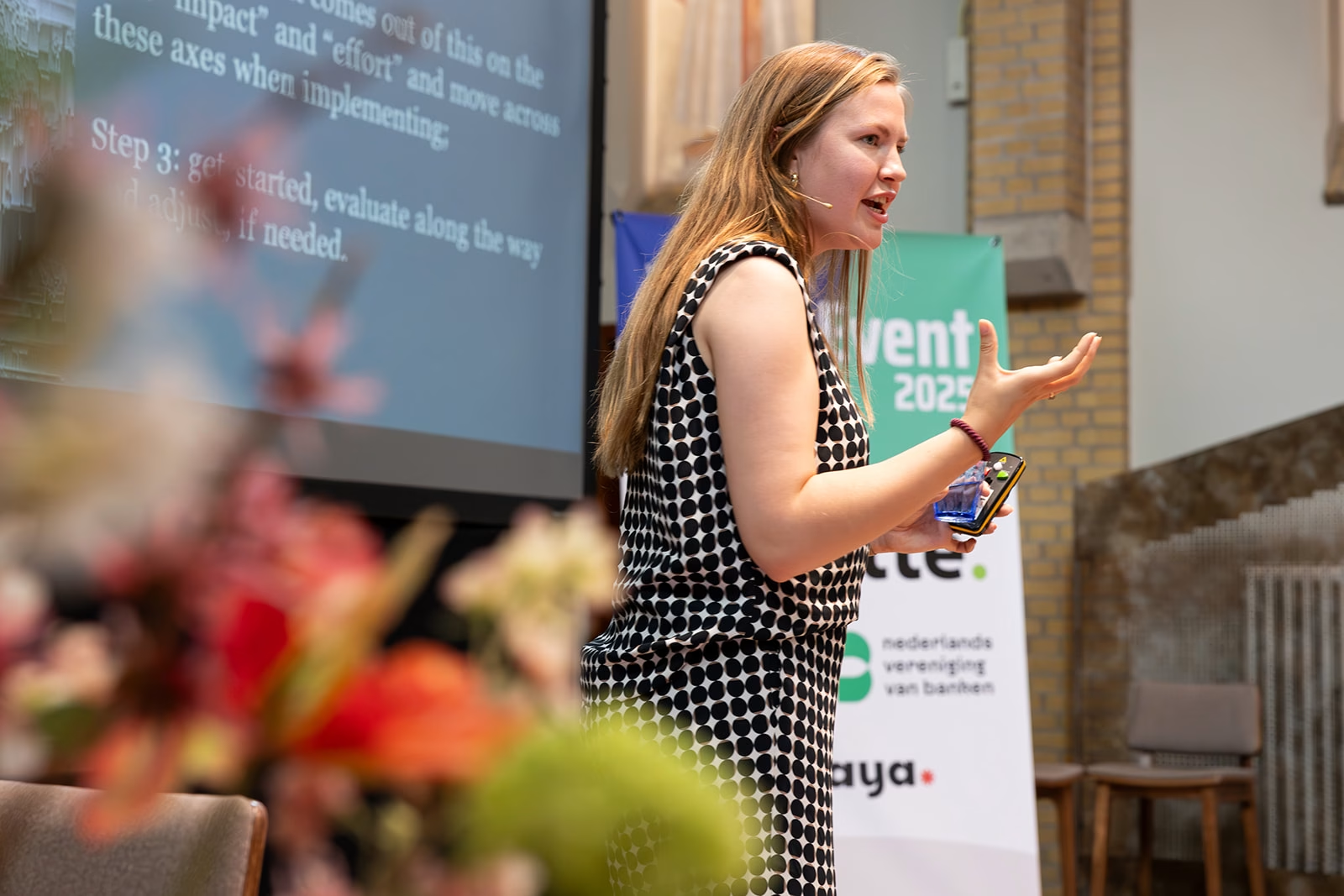
Agricola opened her session with a sharp observation: today’s public debate around generations has turned into a “blaming war.” Headlines like “Gen Lazy,” “Millennials are over,” and “Snowflake generation” reflect how society—and the workplace—has fallen into finger-pointing and stereotypes. Agricola urged the audience to move beyond this divisive narrative: generations should add value to one another, not compete.
She explained that generational differences are not innate personality traits but the result of changing societal norms. Each generation grows up internalizing the values and behaviors of its time. “Every generation is young in a different time, with different norms and perceptions. So they internalize different things,” she said. However, factors like socioeconomic background, gender, geography, and upbringing often shape people more than the decade they were born in. There isn’t one Gen Z or one Baby Boomer, she noted. “Keep in mind that there are more differences within generations than between generations.”
Agricola then explained how every generation brings its own strengths to the workplace. Younger generations, she said, often possess fluid intelligence—the ability to think creatively and adapt quickly—while older generations contribute crystallized intelligence, rooted in deep experience and practical reasoning. “There is no future of work without young people,” she emphasized, “but we also need older generations. To harbor that potential.” True innovation, she argued, happens when organizations connect these strengths rather than allowing age-related friction to persist. With the workforce aging rapidly, she said, it’s vital to combine the “refreshing potential” of youth with the wisdom of experience to remain relevant and innovative.
She closed with a series of actionable tips drawn from research and practice: “Acknowledge that you are in a generational bubble and step out of that from time to time. Find out what the other is about; on an individual level, but also on a generational level.” Treat generational diversity like any other form of diversity—create space for it. Involve multiple generations in projects, decision-making, and especially in AI initiatives. Use reverse mentoring or buddy systems to connect older and younger employees.
Agricola concluded with a challenge for reflection: “Think about the strengths of the generations in your workplace. Are they truly embraced?” Her final message echoed earlier speakers’ calls to action: “We don’t know what the future will look like. But we feel like we need to start.”
Panel III – ‘Building the new generation of HR Leaders: What are key capabilities of future HR leaders and in which domains of the company -other than HR- can they be recruited?’
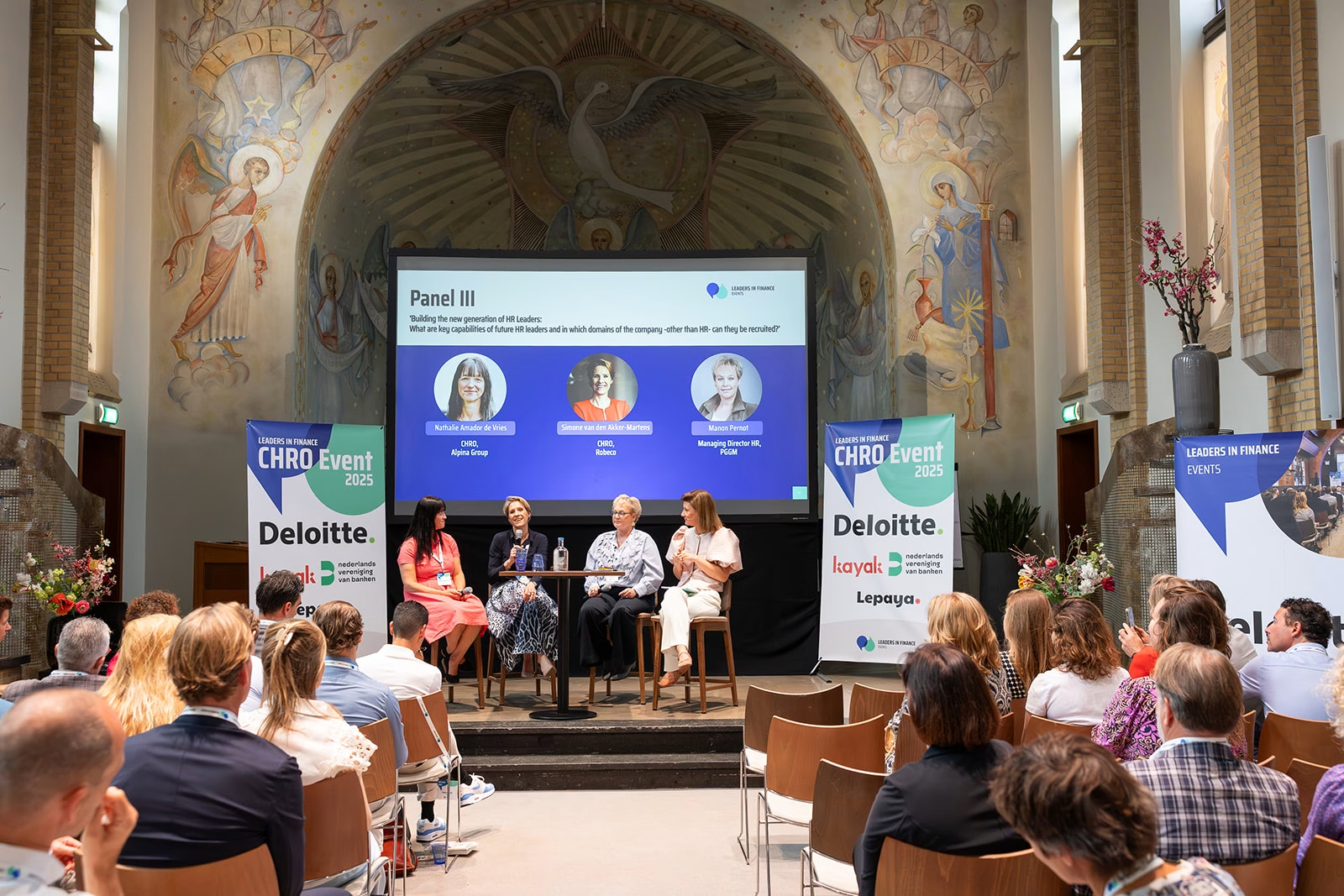
Panelists: Nathalie Amador de Vries (CHRO, Alpina Group), Simone van den Akker-Martens (CHRO, Robeco), and Manon Pernot (Managing Director HR, PGGM).
When asked about the essential capabilities for future HR leaders, van den Akker-Martens highlighted “orchestrating.” “We’re in the ideal seat that you can determine how you can get the behavior and the people side in line with that business strategy. By designing and also implementing HR solutions. ” she said. HR leaders must design systems that help organizations “reach their full potential.” Her second principle: “get out of your own bubble”.
For Pernot, three skills stand out: trust, insight, and resilience. HR, she said, must “speak the language of business” and build trust through relationships and foresight. Yet the “spike” that makes HR special lies in social consciousness. You need to put uncomfortable issues on the table, she said firmly. “Make sure that you have the resilience and the tenacity to keep on putting it on the table. People is business.”
Amador de Vries emphasized authenticity and adaptability. “Be a real human—that’s where we make the difference by breathing trust,” she said. The idea, she explained, is to “show that people can make mistakes and that we will move on. Just start, do it, learn and love.”
As the discussion turned to data and technology, van den Akker-Martens noted that “data is a necessity. It helps, but it’s not the entire reality. But you need to understand it”. At Robeco, analytics matter, but you need to understand the story behind the numbers. Pernot added that HR must balance purpose with business: “We are going through a huge transition for UTP, and that puts a strain on a lot of people. So we said, this is a marathon, not a sprint. Let’s make sure that with all people in our organization, we can get to the finish line.”
Amador de Vries pointed to curiosity and continuous learning as critical in fast-growing environments. “Learning, keep your eyes and ears open, learn from everybody. Our company kind of grew from entrepreneurs,” she said. “They were successful and because of them, we’re here. Don’t stop learning.”
The panel agreed that future HR leaders don’t have to come from traditional HR backgrounds. However, van den Akker-Martens warned that talent mobility can be blocked by protective managers: “The risk is that we have managers who really love that people stay in their seat because they want the work done. That is challenging because we need to be a bit bold, but you also need to stay connected. So how do you stretch to the extent that it’s feasible?”
When asked how they felt about the foundation they were leaving for the next generation, Amador de Vries was candid: “We’re not ready yet. We’re working on it, but we don’t have an overarching bigger plan.” Pernot agreed: “Are we ready? No. Are we doing our best? Yes.” She shared how a recent trainee initiative bridged generations at PGGM: older employees said they liked the new perspective simply because “there’s really something new coming to the table.”
Van den Akker-Martens added optimistically: “The HR role that we have and the value we can bring is very appealing to younger generations. I do think it’s very diverse in terms of activities. It’s very broad. And you can really bring value and purpose to the organization.” The session ended with a quick-fire round on what’s needed most to prepare future leaders. The consensus was clear: “Give them space,” Van den Akker-Martens said. Pernot agreed: “Put them in situations with ambitious goals, let them drive change, and when they fail—they are applauded.”
Interview I – Kristina Flügel (Member of the Supervisory Board, Triodos & Former Global CHRO, DWS Group)
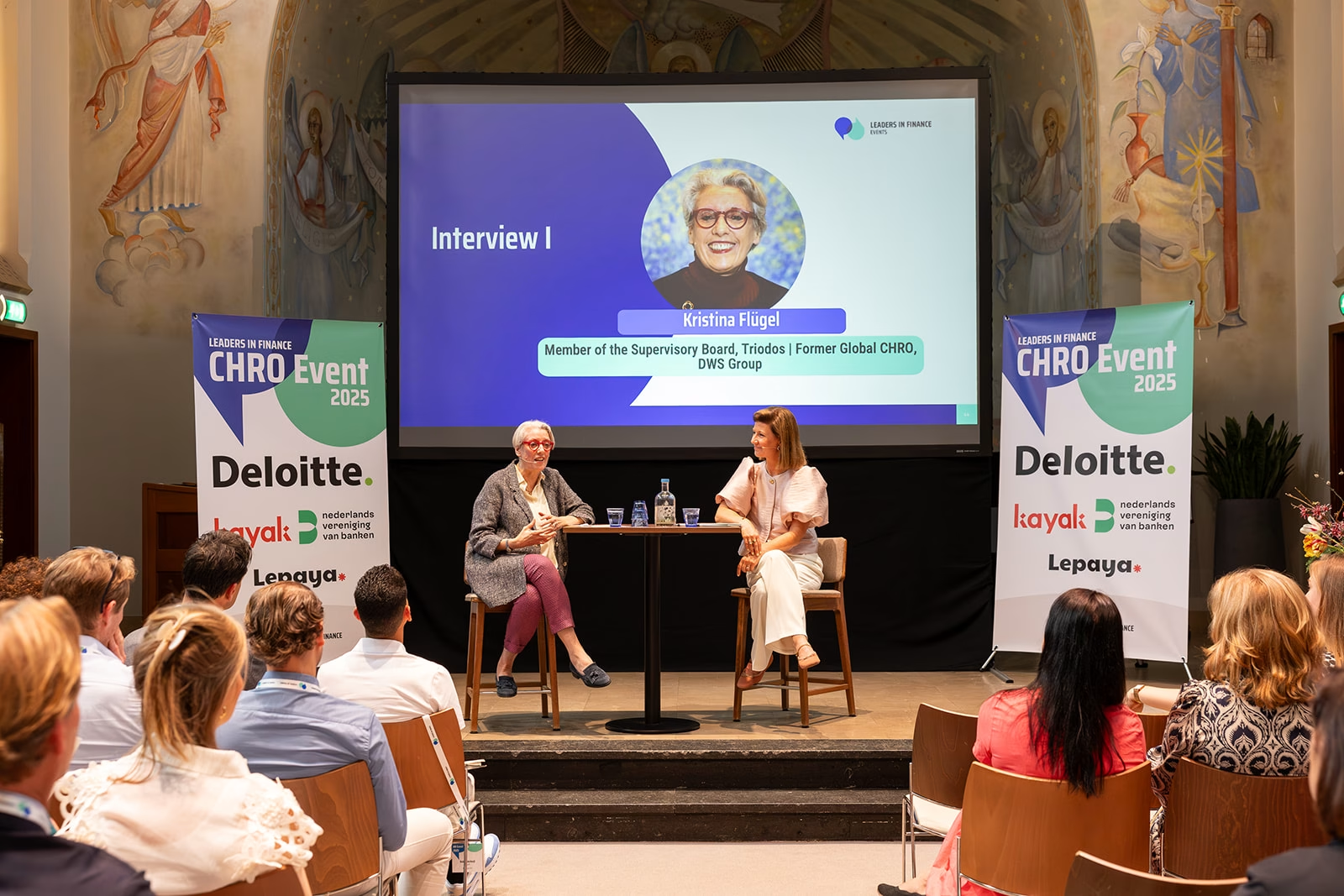
When asked about her work at Triodos, a bank known for its deeply rooted sustainability mission, Flügel described how its founding purpose continues to shape HR. “Triodos wasn’t founded to be a bank. It was to be a company that makes impact,” she explained. “The founders said, ‘probably we can make most impact if we found a bank.’” Those original values, she said, are still the essence of the company
Flügel highlighted how this mission is brought to life through people. “Triodos really finds a way in the attraction part, but then also sustainably—with value ambassadors—to bring it to life with new people,” she said. HR plays a vital role in “preserving and protecting the original impact point, but then bringing it to life in the different roles and also evolving it and bringing other aspects such as diversity and inclusion.”
Turning to the theme of HR capability, Flügel elaborated on the T-shaped model of leadership. “Stand on your feet with the skills that are necessary to shape the system and to make the culture develop further,” she said. “This is key because transformation in the meantime is not continuous. It never stops.”
Flügel also shared insights from her 2018 research at INSEAD on leadership in the digital age. Digitalization would fundamentally shake organizations, she explained. To understand how leaders coped, she conducted interviews using photos as prompts. Every leader had a different definition of what digitalization is, she found. While some saw opportunity, others felt “learning anxiety and even survival anxiety.” Her study revealed a crucial truth: real transformation happens only when it hits the heart. Leaders who “knew themselves well and were aware of the system” managed uncertainty more effectively. Unlike those who resisted change.
Flügel’s main conclusion was simple but powerful: “Leaders have to be the change themselves and show vulnerability.” Asked what message she wanted the audience to take home, she didn’t hesitate: “Never stop learning. The journey is an expedition.”
Interview II – Annelot Fluitman (Chief People Officer, ING Netherlands)
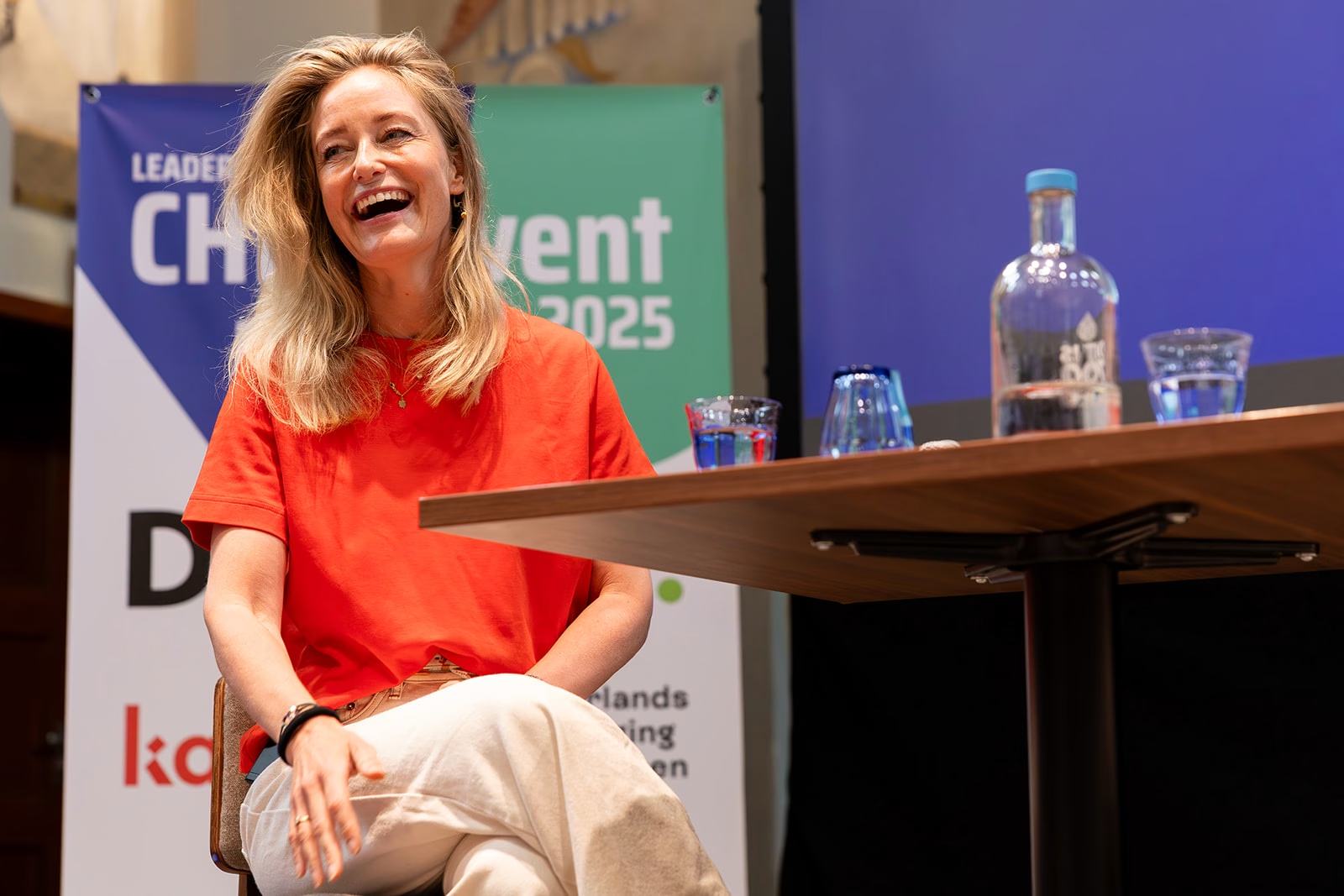
At Shell, Fluitman learned to think long-term. “Every single day we thought in long term horizons,” she recalled. Uber, by contrast, was a crash course in speed and experimentation, Fluitman explained: “Typically we had like eight hours to fix the mistake before you needed to explain that you fixed it. There I actually learned to make mistakes .” When she joined ING, Fluitman admitted she was nervous about losing that fast-paced culture. “I really loved the pace and entrepreneurial spirit,” she said. “So I probed a lot in my interviews to make sure HR had the mandate, the seat at the table, and the appetite to change.”
Fluitman identified several structural challenges HR must address: generational shifts, capability gaps, and changing societal expectations. “With gen Z, we currently already see an experience gap because of all the technological advancements” she explained. “There will be less entry level positions so we need to make sure that we can still employ and give meaningful work to Gen Z”. She also sees older employees wanting to work beyond retirement age: “We need to make sure they stay relevant. Otherwise, people get stuck.”
In the Q&A, an audience member asked whether companies should help employees move internally. “People are the driver,” she said, “but HR and managers have a massive role to play.” She described ING’s “explore fit” approach, which is about having honest conversations. Another question pressed whether labels might stigmatize employees. “That’s something we need to educate managers on,” she emphasized. “As HR, we must make sure people understand definitions and feel comfortable giving feedback. That’s where self-reflection and change starts.”
Fluitman closed by reflecting on HR’s role in a transforming society: “the needs for Gen Z may be very different than the needs from your typical boomer. How to deal with working from home versus coming to the office and creating a space to connect in a world that gets more and more and more digitalized? I think it will eventually become a luxury of being able to come to the office and collaborate together. So these are practical HR things that we need to think of.”
Interview III – Leanne Caret (Fortune 100 Board Director & Former CEO Boeing Defense, Space & Security)
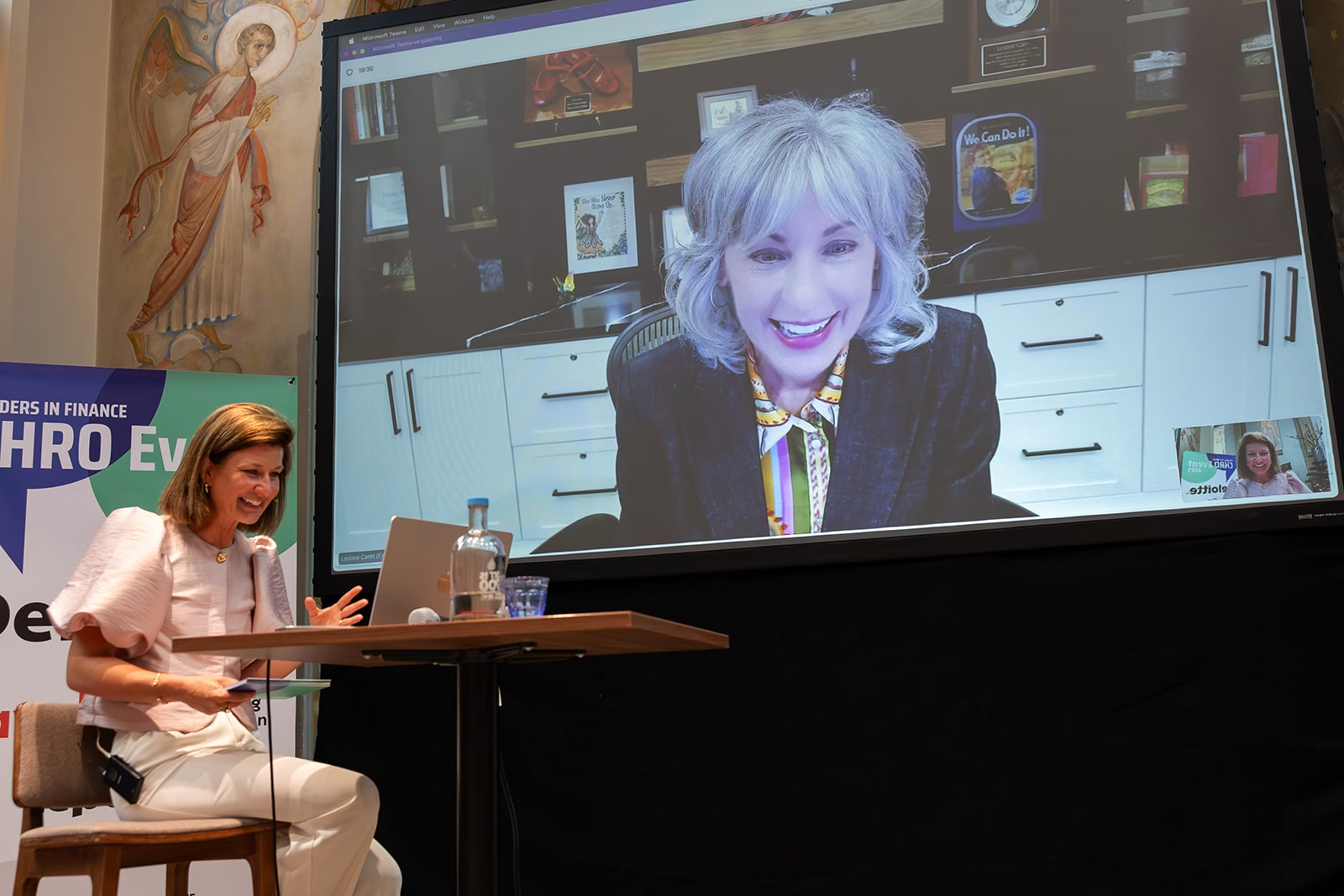
Live from the United States, Caret joined the conference virtually, radiating energy. “I am thrilled to be part of a finance conference. I love finance,” she smiled, introducing herself as a former CEO and CFO who spent 35 years at Boeing before transitioning into board and advisory roles. Caret began by challenging how organizations still perceive HR.
“In the 90s and 2000s, many folks really delegated tasks such as culture and people to somebody as if it wasn’t their responsibility, but what I found is that the best performing teams are ones that have a holistic approach to culture and it starts at the top,” she said. To her, HR is “as important a function as engineering or accounting”. Her rule for HR leaders is simple: “you have a seat at the table and you have a voice and I expect you to use it. And that starts from strategy all the way to execution on the day-to-day operations”.
She emphasized that a modern HR professional must understand the business, the customer, and the team’s real challenges—but above all, must be “not afraid to speak truth to power. ” Her advice to those who feel unheard was direct: “First, show up. Take the seat. You can be an HR professional who just manages processes—or one who is a business leader influencing the outcome. You have to decide which one you want to be.” Caret underscored how crucial this distinction can be for the success or failure of the company. She credited her own HR partner with shaping many of her most critical decisions: “He was never afraid to kick me under the table and say, we’re not going down that path.”
On the topic of AI, Caret drew a striking parallel with the dawn of the internet. She urged HR leaders to view it as “a people shifter, not a people eliminator.” AI, she said, will free up time for more meaningful, human work. Asked how to foster adoption of AI across teams, she advised HR to stop treating it as an “evil empire.” She encouraged “daily tabletop exercises” to explore how AI could improve work: “you need to create scenarios specific to your business. How AI is going to change how you do work, and what are the opportunities with it?”
To close, Caret shared her personal leadership framework—her “Four Gs”: “Grit, Gumption, Grace, and Gratitude.” Her final call to action for HR leaders was both empowering and personal: “Have a seat, show up, and actually have something to say. It may start small, but once you start getting comfortable that you belong at that table, because you do, it’s going to have incredible results.
Uniting the financial sector by discussing pressing topics and enhancing cooperation. That’s what we love to do at Leaders in Finance. By listening, learning, and connecting with others, we accelerate the sharing of ideas, thus powering (upcoming) leaders and organizations to shape the future of financial services.
Want to explore how we can benefit your organizational goals? We’re happy to meet and discuss opportunities. Each part of the Leaders in Finance Group – has its unique approach. Want to explore how we can benefit your organizational goals? We’re happy to meet and discuss opportunities.